 blog
Best Kitchen Appliance Bundle Deals: 2026 Buying Guide
Table of Contents
- Why Kitchen Appliance Bundles Save You Money
- Quick Comparison: Popular Kitchen Suite Configurations
- How to Choose Kitchen Appliances That Fit Your Space
- When to Buy Kitchen Appliances for the Best Deals
- Gas vs. Electric and Induction: Matching Your Cooking Style
- Financing Options for Kitchen Appliance Packages
- Smart Home Integration and Eco-Friendly Features to Consider
- Small Kitchen and Apartment-Sized Bundles
- Long-Term Maintenance Costs and Warranty Protection
- Frequently Asked Questions
Last Updated: September 18, 2026
Why Kitchen Appliance Bundles Save You Money
Shopping for the best kitchen appliance bundle deals is really about one thing: buying a coordinated set of appliances for less than you would pay piece by piece. Shopping for the best kitchen appliance bundle deals is really about one thing: buying a coordinated set of appliances for less than you would pay piece by piece. A bundle typically groups a refrigerator, range, dishwasher, and microwave into one package price. Retailers and manufacturers often stack instant savings, rebates, and delivery credits on top. The catch is that not every bundle is built the same way.
Quick Comparison: Popular Kitchen Suite Configurations
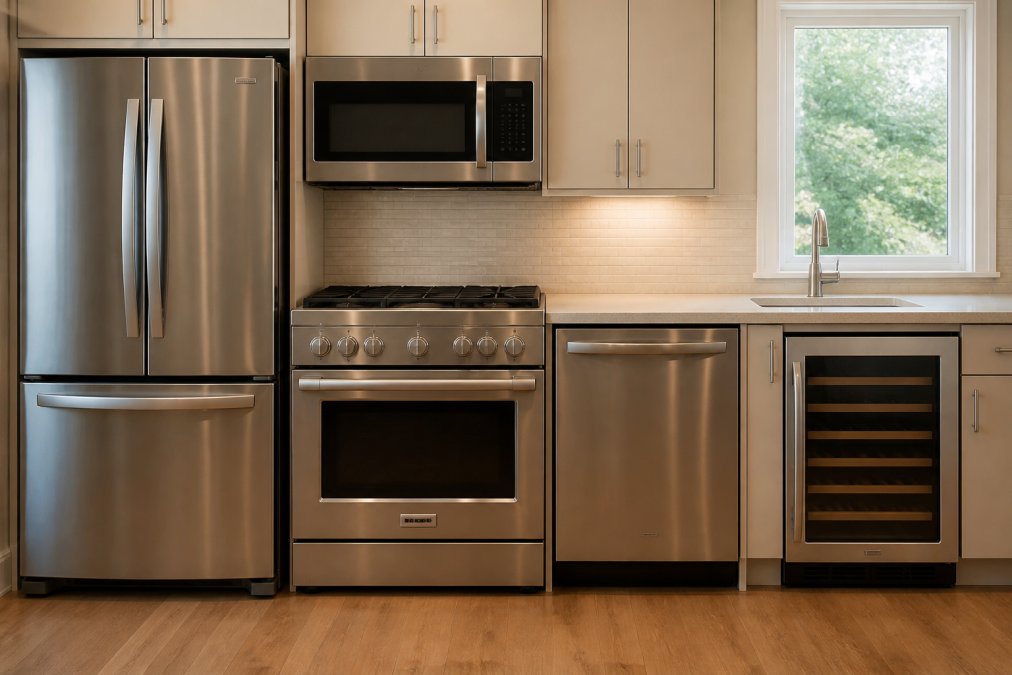
A kitchen suite is a matched set of appliances sold together, usually sharing a finish and a design language. The two most common configurations are the 4-piece and 5-piece package, and the one you pick depends on whether you already own a working microwave or cooktop.

4-Piece vs. 5-Piece Packages
A standard 4-piece bundle covers the refrigerator, range, dishwasher, and microwave. A 5-piece adds a wall oven, cooktop, or a second appliance such as a beverage cooler. The 4-piece is the workhorse for most remodels.
| Configuration | What's Included | Best For | Watch For |
|---|---|---|---|
| 4-piece | Refrigerator, range, dishwasher, microwave | Most kitchen renovations | Confirm microwave is over-the-range |
| 5-piece | Above plus wall oven or cooktop | Custom layouts, double-oven cooks | Higher total cost, tighter sizing |
| Compact 3-piece | Refrigerator, range, dishwasher | Apartments, rentals | No microwave included |
How to Choose Kitchen Appliances That Fit Your Space
The single biggest mistake in a kitchen remodel is buying appliances before measuring the openings. Standard-depth refrigerators need roughly 30 to 36 inches of width plus clearance for doors and ventilation. Counter-depth models sit flush with cabinetry but hold less inside. Measure width, height, and depth at every opening, then add a half-inch of breathing room.
Measuring for Counter-Depth and Standard Refrigerators
Counter-depth refrigerators line up with your counters for a built-in look, but they trade capacity for that finish. Standard-depth units hold more and cost less, though they jut past the cabinet line. If your kitchen is tight, a counter-depth fridge can free up walking space. If you cook for a crowd, standard depth usually wins.
When to Buy Kitchen Appliances for the Best Deals
The best time to buy kitchen appliances is during major holiday sales and at the end of a model year. New models arrive in fall, so outgoing inventory gets marked down. Holiday weekends bring some of the deepest instant savings of the year. But timing alone does not produce the best deal, stacking the right discount layers at the right moment does.
The Four Discount Layers You Can Stack
A bundle discount is rarely a single price cut. It is usually several layers that can be combined, and knowing the order matters:
- Manufacturer instant savings. The brand funds a rebate when you buy a qualifying suite (often three or more matching pieces). This is applied at checkout.
- Retailer bundle discount. The store adds its own markdown for buying the set together, separate from the manufacturer's offer.
- Utility and government rebates. Efficiency programs and federal tax incentives can apply to qualifying ENERGY STAR models. These are usually claimed after purchase, not at the register.
- Delivery, haul-away, and installation credits. Many retailers waive delivery or remove the old appliance for free during promotional windows.
The trap is that some offers are mutually exclusive. A manufacturer rebate may not combine with a competitor price match, and a promotional financing offer may void an instant-savings discount. Ask the sales associate to list which layers can be combined before you commit.
Model-Year Timing in Practice
New appliance lines typically debut in late summer and fall. That means the previous generation gets discounted from roughly late summer through the following spring, with the deepest cuts on floor models and discontinued finishes. If you are not tied to the newest features, buying the outgoing model year is one of the most reliable ways to cut a bundle price.
Price-Match and Price-Adjustment Windows
Ask whether the store offers a price match and, more importantly, a price-adjustment window. A price-adjustment policy lets you claim the difference if the same item drops in price within a set number of days after purchase, often 15 to 30 days. Buy during a sale, then watch the price through the adjustment window. This is a low-effort way to capture a second discount without returning anything.
Why the Lowest Sticker Price Is Not Always the Best Deal
A bundle that is $200 cheaper up front but excludes free delivery, haul-away, and installation can cost more once those services are added back. Weigh the total delivered price, appliance cost plus delivery, installation, haul-away, and any required parts or hookup kits, rather than the headline number. That total is the figure worth comparing across stores.
Gas vs. Electric and Induction: Matching Your Cooking Style
Your cooking habits should drive this choice more than the sale price. Gas ranges give instant heat control and work during a power outage. Electric ranges are simpler to install where no gas line exists. Induction cooktops heat fastest and stay cool to the touch, but they need magnetic cookware.
- Gas range: Precise flame control, needs a gas line and venting.
- Electric range: Easy install, even baking, slower to adjust.
- Induction cooktop: Fast, efficient, safe surface, requires compatible pans.
Match the range to your existing hookups unless you plan to run a new line.
Financing Options for Kitchen Appliance Packages
Financing options for kitchen appliances let you spread a full suite across monthly payments instead of one lump sum. Most retailers offer two broad categories, and the difference between them is where people get hurt.
Promotional (Deferred-Interest) Financing vs. Standard Installment Plans
- Promotional financing offers no interest if you pay the full balance before the promotional period ends, commonly 6, 12, 18, or 24 months. If you miss the deadline, many of these offers charge retroactive interest on the entire original balance from the purchase date, not just the remaining amount (How to understand special promotional financing offers on credit cards). That is the single most expensive mistake in appliance financing.
- Standard installment plans charge a fixed interest rate from day one but have no retroactive penalty. They cost more if you pay early and less if you pay late.
If you choose promotional financing, divide the balance by the number of months in the window and set an automatic payment for slightly more than that amount. Paying it off one month early removes the retroactive-interest risk entirely.
Store Cards, Manufacturer Promotions, and Third-Party Lenders
Financing can come from three places: a retailer's store card, a manufacturer's promotional program, or a third-party lender the store partners with. Store cards often carry the deepest promotional windows but the highest standard rates if you miss them. Manufacturer promotions may tie financing to specific brands or suites. Third-party lenders may approve a wider range of credit profiles but with less favorable terms. Compare the annual percentage rate, the promotional length, and the penalty structure, not just the monthly payment.
Rebates and Tax Incentives That Offset the Price
Financing is only one lever. Rebates and incentives can lower the principal you are financing in the first place:
- Utility rebates. Many utilities pay a rebate for qualifying ENERGY STAR refrigerators, dishwashers, and other efficient appliances. Programs and amounts vary by utility and region, and some require you to apply within a set window after purchase.
- Federal tax incentives. Certain high-efficiency appliances may qualify for federal tax credits. Eligibility and amounts change, so confirm current rules before relying on them.
- Manufacturer rebates. These are often paid as a prepaid card or check after you submit proof of purchase, so they arrive weeks after the sale.
Stacking a rebate on top of a promotional financing offer can meaningfully reduce what you actually owe. Check ENERGY STAR rebate finder to see which programs apply in your area.
The Total Cost of Ownership Angle
The purchase price is only the first cost. Over the life of a suite, you also pay for energy, water, repairs, parts, and possibly a protection plan. A more efficient refrigerator or dishwasher can trim monthly utility bills, which offsets part of the upfront price over several years. When comparing two bundles, estimate the annual energy and water use of each and add it to the financed amount. A slightly more expensive, more efficient suite can cost less in total than a cheaper, less efficient one.
Smart Home Integration and Eco-Friendly Features to Consider
Smart features are worth it only if they solve a problem you actually have. A refrigerator that sends a phone alert when the door is left open earns its keep. A range you can preheat from the couch is a nice-to-have. Look for appliances that work with the smart home platform you already use.
Eco-friendly features matter for the long run. ENERGY STAR certified appliances meet federal efficiency standards and often qualify for utility rebates. A more efficient refrigerator or dishwasher can trim monthly power and water use, offsetting part of the upfront cost over time. Check ENERGY STAR appliance guidance for certified models and available rebate programs in your area.
Small Kitchen and Apartment-Sized Bundles
Not every kitchen can fit a full-size suite, and that is fine. Compact and apartment-sized bundles scale appliances down without sacrificing a coordinated look. A 24-inch range, a slim counter-depth refrigerator, and an 18-inch dishwasher can transform a small galley kitchen.
These smaller packages suit rentals, ADUs, and starter homes. They also cost less to run and take up less floor space. The trade-off is capacity, so measure your cooking and storage needs honestly before downsizing.
Long-Term Maintenance Costs and Warranty Protection
The purchase price is only part of the total cost. Maintenance, repairs, and replacement parts add up over the life of a kitchen suite. A protection plan can cover surprise failures, but read what it excludes before you buy. Factory warranties typically cover defects for a set period, not wear and tear.
Keep your manuals and register your appliances, since some warranties require it. Buying from a dealer with in-house service and genuine replacement parts makes repairs faster and keeps your equipment running longer. The Appliance Wizard maintains a full inventory of genuine parts and offers certified in-home repair, which matters when a warranty claim or a breakdown hits.
Frequently Asked Questions
Is it cheaper to buy all appliances in a bundle?
Yes, kitchen appliance bundles typically cost less than buying each piece separately. Retailers offer instant savings, rebates, and package discounts when you purchase a matching set. You also save on delivery and installation fees since everything arrives together. The exact savings depend on the brand, configuration, and current promotions, so it pays to compare bundle pricing against individual unit costs before committing.
What is the best time to buy appliance bundles?
Major holiday sales events like Memorial Day, Labor Day, Black Friday, and Presidents' Day consistently offer the deepest discounts on kitchen suites. New model releases in late summer and early fall also push previous-year inventory into clearance pricing. If you are not tied to a specific timeline, waiting for one of these windows can mean significant instant savings on a full appliance bundle.
What should I look for when comparing kitchen appliance packages?
Start with dimensions and capacity to ensure each unit fits your kitchen layout. Check the finish across all pieces for a coordinated look, and confirm whether the package includes delivery and installation. Review energy efficiency ratings to estimate long-term operating costs, and ask about warranty terms. A knowledgeable salesperson can help you compare configurations side by side so you do not overlook a critical spec.
Are smart kitchen appliance bundles worth the extra cost?
Smart bundles add WiFi connectivity, app-based controls, and diagnostic features that can simplify maintenance and troubleshooting. If you already use smart home devices or want remote monitoring, the upgrade may be worthwhile. However, if you rarely use connected features, a standard bundle with strong performance ratings and reliable warranty coverage often delivers better value for your budget.