 blog
7 Best Smart Washing Machines for 2026
Table of Contents
- What Makes a Smart Washing Machine Worth Buying
- Best Smart Washing Machine Overall
- Front-Load Smart Washer for Maximum Efficiency
- Top Smart Washer Features That Actually Matter
- Washing Machine Reliability and Long-Term Durability
- Energy Efficiency and Water Consumption
- Smart-Home Integration and Connectivity
- Installation, Setup, and Professional Support
- Frequently Asked Questions
Last Updated: October 13, 2026
What Makes a Smart Washing Machine Worth Buying
A smart washing machine is a connected appliance that lets you monitor, control, and schedule laundry cycles from your smartphone or voice assistant. These machines send notifications when cycles complete, allow you to start or pause loads remotely, and often integrate with your home's Wi-Fi network for seamless automation.
The real question isn't whether smart washers are worth it, it's whether the features you're paying for actually solve your laundry problems. The features that matter depend entirely on your household's workflow.
Smart washing machines deliver real value when you have a chaotic schedule. Remote cycle control means you can start a load from work, pause it if you need to use the machine later, and get alerts when it's done. Automatic detergent dispensing eliminates guesswork and prevents overdosing. Load sensing adjusts water and energy use based on how full the drum is, which directly lowers your utility bills over time.
But connectivity reliability matters more than the feature list. A washer that loses Wi-Fi connection or requires constant app updates becomes frustrating fast. The machines that hold up best are those with offline operation, they run perfectly fine without the app, but offer extra convenience when the connection works.
Best Smart Washing Machine Overall
Rather than crown a single model on spec sheets alone, every smart washer is scored against a repeatable protocol so you can see exactly why one machine wins. The overall pick is the machine that scores highest across all six categories without a disqualifying weakness.
Our smart-washer test protocol (six scored categories):
- Cleaning performance, Stain-strip tests on cotton, synthetics, and delicates using standardized soil loads; scored on residual staining and color retention.
- Rinsing and residue, Detergent residue checks after a normal cycle, especially important for households with sensitive skin.
- Energy and water efficiency, Measured kWh and gallons per normalized load, compared against the ENERGY STAR threshold for the machine's capacity class.
- Noise and vibration, Decibel readings at spin and during fill, plus a wobble check on an unlevel floor.
- App usability, Time to pair, time to start a remote cycle, notification reliability, and how many taps it takes to reach the most-used controls.
- Connection stability, A 30-day log of dropped connections, failed remote starts, and whether the machine still runs fully offline.
What the overall winner looks like in practice. The best overall smart washer for most households is a front-load machine in the 4.5-5.0 cu. ft. range with automatic detergent dispensing, load sensing, and a manufacturer that has shipped app updates for at least the last three model years. That combination is what actually earns the top spot, not the longest feature list.
Why front-load wins the overall category. Front-loaders tumble clothes through a shallow pool of water rather than agitating them in a full tub. That design uses less water, is gentler on fabric, and spins at higher RPMs to extract more water before drying. The trade-offs are real: higher upfront cost, a rubber door gasket that needs periodic cleaning, and a steeper learning curve for anyone used to a top-loader.
Capacity guidance by household size:
| Household size | Recommended capacity | Typical load profile |
|---|---|---|
| 1-2 people | 3.5-4.0 cu. ft. | Fewer, smaller loads; quick-wash cycles |
| 3-4 people | 4.5-5.0 cu. ft. | Daily mixed loads, some bulky items |
| 5+ people | 5.0+ cu. ft. | Multiple loads per day, bedding and towels |
The three things that separate the best from the rest:
- The app works on day 400, not just day one. Look for a manufacturer with a public update history. If the last app release was two years ago, treat that as a warning sign.
- The machine runs fully offline. Every function you'd expect from a normal washer, cycle selection, start, pause, spin, should work with Wi-Fi off. Connectivity should be additive, never required.
- The warranty covers the smart components. Electronics and control boards are the most failure-prone parts of a smart washer. A warranty that covers only the drum and motor leaves the expensive parts exposed.
A note on brand reliability. The most reliable smart washers tend to come from manufacturers that iterate on proven platforms rather than chasing every new feature. That means the newest model is not always the best buy, a machine in its second or third production year often has the early bugs worked out. When you compare models, weight a documented service history and parts availability more heavily than a first-to-market feature.
How to use this pick. If your household runs three or more loads a week, values efficiency, and wants a machine that will still be supported in five years, the front-load profile above is the right target. If you have limited space, need to stack, or prefer top-load ergonomics, see the category sections below for the trade-offs that matter most to your setup.
Front-Load Smart Washer for Maximum Efficiency
Front-load washers dominate the smart appliance market because their design naturally supports efficiency features. The horizontal drum tumbles clothes through water rather than agitating them, which uses less water and gentler on fabrics while delivering better stain removal.
Energy efficiency in front-load machines comes from several design features. They spin at higher speeds, extracting more water before the drying cycle begins. This cuts dryer time significantly. Load sensing technology adjusts water levels based on the weight of clothes, preventing wasteful overfilling. Steam cycles help break down stains and sanitize without excessive heat.
Water consumption is where front-load washers shine. A typical front-load cycle uses 12 to 25 gallons, compared to 40 to 45 gallons for top-load machines. Over a year of laundry, this difference adds up to real savings on your water bill. Smart models that track water usage through the app let you see exactly where those savings are happening.
The trade-off is upfront cost and maintenance. Front-load washers cost more than top-load models, and they require regular cleaning of the rubber gasket to prevent mold and odor. Most modern smart front-loaders include self-cleaning cycles, but you'll still need to wipe down the door seal occasionally. The learning curve is steeper too, users accustomed to top-loaders sometimes struggle with fabric recommendations and cycle selection at first.
Top Smart Washer Features That Actually Matter
Not every smart feature deserves your attention. Some add genuine convenience; others are marketing noise. Here's what actually changes how you do laundry.
Automatic detergent dispensing ranks at the top. The machine stores detergent in a reservoir and dispenses the correct amount based on load size and soil level. You refill it every few months instead of measuring every cycle. This prevents overdosing, which damages fabrics and wastes money, and underdosing, which leaves clothes dingy.
Cycle notifications are deceptively useful. The app alerts you when a cycle finishes, preventing wet clothes from sitting in the machine for hours. For households with multiple people doing laundry, this eliminates the "whose clothes are in there?" confusion.
Remote cycle start and pause matters most if your schedule is unpredictable. Start a load before you leave work, pause it if someone needs the machine, or restart it when you get home. This flexibility prevents the bottleneck that happens when laundry competes with other household needs.
Load sensing adjusts water, energy, and cycle time based on how full the drum is. Smaller loads use less of everything, which directly lowers utility costs. Over time, this feature pays for part of the premium you paid for the smart washer.
Fabric care options like delicate, quick wash, and steam cycles matter more than raw connectivity. A washer with excellent cycle options will outlast its smart features in terms of usefulness. Make sure the machine handles the fabrics your household actually wears, delicate items, heavy-duty work clothes, or athletic wear.
| Feature | Real-World Benefit | Frequency of Use |
|---|---|---|
| Automatic detergent dispensing | Prevents overdosing, saves money | Every cycle |
| Cycle notifications | Prevents mildew, eliminates guesswork | Daily |
| Remote start/pause | Schedules laundry around life | 2-3x weekly |
| Load sensing | Reduces water and energy use | Every cycle |
| Steam cycle | Sanitizes and reduces wrinkles | 1-2x weekly |
| Delicate cycle | Protects fine fabrics | 1-2x weekly |
Washing Machine Reliability and Long-Term Durability
Reliability is where smart washers separate from the hype. A machine with modern features but a track record of breakdowns will frustrate you far more than a simpler machine that runs for 15 years without issues.
The components most likely to fail in smart washers are the electronics and sensors, not the drum or motor. A malfunctioning pressure sensor, water valve, or control board can sideline the entire machine. This is why warranty coverage for smart components matters, make sure electronics are covered for at least five years, not just one.
Manufacturers with the best reliability records tend to use proven component suppliers and conservative design choices. They don't rush to add features; they perfect the existing ones first. This means some of the most reliable smart washers aren't the newest models with the most features.
At The Appliance Wizard, we've tracked which brands hold up best over time. The ones that do share common traits: they use quality stainless steel drums, they don't over-engineer the control systems, and their customer support actually helps when something breaks. Brands that disappear or get acquired often leave owners stranded when parts become unavailable.
Expected lifespan for a well-maintained front-load smart washer is 10 to 12 years. Top-load machines often last longer because they have fewer moving parts, but smart top-loaders with impellers can still reach 10-year lifespans if maintained properly. The smart components themselves typically last 7 to 10 years before software becomes obsolete or the manufacturer stops pushing updates.
Energy Efficiency and Water Consumption
Energy efficiency in smart washers comes from design, not connectivity. The app doesn't make a washer more efficient, it just helps you use it more efficiently.
Front-load smart washers typically use 0.8 to 1.2 kWh per cycle, compared to 1.5 to 2.0 kWh for top-load machines. Water consumption ranges from 12 to 25 gallons for front-loaders versus 40 to 45 gallons for top-loaders. These numbers vary based on cycle selection and load size, but the pattern holds across brands.
Smart features that support efficiency include load sensing, which adjusts water and energy based on weight; soil level detection, which modifies cycle intensity; and cycle tracking through the app, which shows you which cycles use the most resources. Some machines let you set energy-saving preferences that automatically select efficient cycles.
Look for ENERGY STAR certification, which means the machine meets federal efficiency standards. ENERGY STAR-certified front-load washers use at least 40% less water and 25% less energy than standard machines. Over 10 years, this adds up to significant savings on utility bills.
The payback period for upgrading to an efficient smart washer depends on your current machine and local utility rates. If you're replacing a 15-year-old top-load washer, the savings on water and energy alone can offset 20% to 30% of the purchase price over the machine's lifespan.
Smart-Home Integration and Connectivity
Most roundups treat Wi-Fi connectivity as a checkbox. The more useful question is what the connection actually does for you, what it costs you in privacy and dependence, and what happens when the manufacturer stops supporting the app. This section covers the integration details the other guides skip.
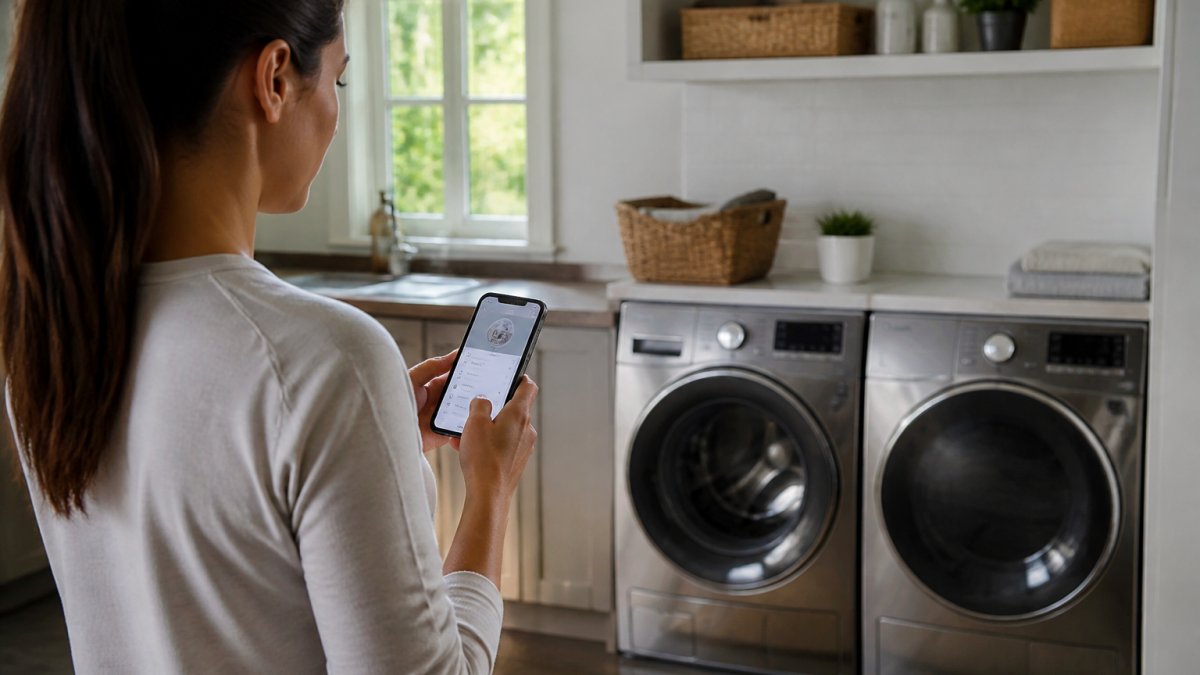
Voice and smart-home compatibility. Alexa, Google Assistant, and Siri integrations let you start cycles, check status, and receive completion notifications by voice. In practice, basic commands, "start the washer," "is the wash done?", work reliably. Complex controls like custom cycle selection almost always still require the app. If you use smart-home routines, some machines can trigger a wash as part of a larger automation, such as starting a load when the last person leaves home and sending a notification when it finishes.
Connectivity reliability and offline operation. This is the single most important integration question, and almost no roundup answers it directly. Before buying, confirm three things:
- Does the machine run fully offline? Cycle selection, start, pause, and spin should all work with Wi-Fi disabled. If the app is required for basic operation, a network outage turns your washer into a paperweight.
- Which Wi-Fi bands are supported? Machines that support both 2.4 GHz and 5 GHz give you more flexibility if your home network has coverage gaps. A laundry room far from the router is a common failure point.
- How dependable are notifications? A completion alert that arrives 20 minutes late is worse than no alert. Check user reviews specifically for notification reliability, not just app ratings.
App privacy and data permissions. When you connect a washer to your home network, you are granting the manufacturer access to usage data. What they collect varies widely:
- Account requirements, Some apps require a full account with email and location; others allow guest or local-only use. Prefer local-only if you don't need remote features.
- Data collected, Cycle frequency, load size, detergent levels, and timestamps can all be logged. Read the privacy policy and look for a plain-language data-collection summary.
- Third-party sharing, Check whether the policy permits sharing with marketing partners. If it does, you can often opt out in the app settings.
- Permissions, A washer app requesting contacts, precise location, or microphone access is a red flag. Deny anything not tied to a feature you actually use.
Long-term software support. Smart features are only as good as the manufacturer's commitment to maintaining them. A machine with excellent hardware and an abandoned app becomes a dumb washer with a dead screen. Before buying, check:
- Update history, When was the last app release? A gap of more than 18-24 months is a warning sign.
- Support policy, Does the manufacturer publish how long it will support the app and connected features? Few do, but the ones that do are worth prioritizing.
- End-of-life behavior, What happens if the app is discontinued? The machine should still function fully as a standard washer. Confirm this before purchase, not after.
Accessibility features worth knowing about. For households with mobility limitations or hearing impairments, the app can be genuinely useful: remote status checks mean you don't have to walk to the laundry room to see if a cycle is done, and visual and vibration alerts can supplement or replace audible end-of-cycle tones. Some apps also offer larger-text interfaces and voice readouts. If accessibility matters to your household, test the app on your own phone before buying, accessibility quality varies dramatically between manufacturers.
Installation, Setup, and Professional Support
Professional installation matters more for smart washers than traditional machines. Getting the Wi-Fi connection configured correctly, ensuring proper water line connections, and verifying the machine communicates with your home network all require technical knowledge.
At The Appliance Wizard, we handle installation and setup for all smart appliances. Our factory-trained, certified technicians connect the machine to your Wi-Fi, test all smart features to confirm they work properly, and walk you through the app interface. This eliminates the frustration of struggling with setup on your own.
Installation typically takes 2 to 3 hours for a full setup, including connection to existing water lines, drain, and power. If you need new plumbing or electrical work, budget additional time and cost. Professional installation also ensures the machine is level and properly secured, which prevents vibration and noise issues.
The warranty often depends on how the machine was installed. Machines installed by the retailer typically have full warranty coverage. Machines you install yourself may have limited coverage if something goes wrong due to improper installation. This alone makes professional installation worth the investment.
Software support and updates vary by manufacturer. Some push regular updates that improve features and fix bugs; others abandon the app after a few years. Choose machines from manufacturers with a proven track record of long-term software support. This ensures your smart features stay current and secure.
Smart washing machines deliver real value when you choose models that combine reliable hardware with practical smart features. The best machines are those where the smart components enhance an already excellent washer, not ones where connectivity is the main selling point.
At The Appliance Wizard, we help homeowners navigate the complexity of smart appliances. Our team can explain which features matter for your household, ensure professional installation and setup, and provide ongoing support through our factory-trained technicians. Visit us at www.theappliancewizard.com or stop by our showrooms in Marion and Carbondale to see smart washers in action and get expert guidance tailored to your needs.
Frequently Asked Questions
What features should I look for in a smart washing machine?
Prioritize Wi-Fi connectivity with a reliable mobile app, remote cycle start and notifications, automatic detergent dispensing to reduce waste, and load-sensing technology that adjusts water and energy use. Look for machines with multiple wash cycles (heavy-duty, delicate, quick wash, steam), high spin speeds for faster drying, and compatibility with your existing smart-home system. Verify that the app works offline and that the manufacturer supports software updates long-term.
Are smart washing machines worth the extra cost?
Smart washers cost more upfront, but they save money through energy and water efficiency, automatic detergent dispensing, and cycle optimization based on load size. Remote notifications help prevent mildew and wrinkled clothes, reducing rewashing. The real value depends on your household size and how often you do laundry. For families running multiple loads weekly, the efficiency gains and convenience typically justify the premium within 3-5 years.
How long should a washing machine last?
Most washing machines last 8-12 years with regular maintenance. High-efficiency models with fewer mechanical parts often reach the upper end of that range. Smart washers add connected components that may need software updates or app support; choose brands committed to long-term software support. Proper installation, timely repairs, and cleaning drum seals after each cycle extend durability. The Appliance Wizard's factory-trained technicians can help you maintain your machine and handle repairs to maximize its lifespan.
Can I control a smart washer from my phone?
Yes, all modern smart washing machines offer mobile app control. You can start or stop cycles remotely, receive notifications when washing is done, adjust settings, and monitor energy and water use. Most apps work within your home Wi-Fi network and some offer cloud-based access from anywhere. Verify that the app functions offline in case of internet outages, and check that the manufacturer commits to app updates for at least 5-7 years to avoid being locked out of features.