 how-to
Can You Remodel a Kitchen on a Budget? Yes, Here's How
Table of Contents
- Kitchen Remodel Cost Breakdown: Where Your Money Actually Goes
- The High-ROI Upgrades That Make a Budget Remodel a Kitchen Worth Doing
- Affordable Kitchen Appliance Upgrades: Refurbished, Scratch-and-Dent, and Package Deals
- DIY Kitchen Makeover Tips That Save Thousands on Labor
- Surface Updates: Painting Cabinets, Refinishing Countertops, and New Hardware
- Flooring, Backsplash, and Lighting on a Realistic Budget
- Permits, Structural Safety, and When You Need a Contractor
- Material Sourcing and Longevity: Getting More Years Out of Every Dollar
- Frequently Asked Questions
Last Updated: September 30, 2026
Kitchen Remodel Cost Breakdown: Where Your Money Actually Goes
Can you remodel a kitchen on a budget? Yes, and the smartest way to start is knowing where your money goes before you spend a dime. This guide from The Appliance Wizard breaks down the real costs so you can plan with confidence.
Most homeowners are shocked by one number: labor. According to U.S. Census Bureau data on residential improvement spending, labor and installation routinely eat up half of a typical renovation budget. Materials take the rest.
Here's a realistic kitchen remodel cost breakdown by category:
| Category | Share of Budget | Notes |
|---|---|---|
| Labor and installation | 40-50% | Highest cost, biggest DIY savings |
| Cabinets and hardware | 20-30% | Paint and new pulls save the most |
| Appliances | 10-20% | Refurbished units cut this sharply |
| Countertops and backsplash | 10-15% | Refinishing beats replacing |
| Flooring and lighting | 5-10% | Quick wins live here |
The lesson is simple. Cut labor with your own hands, and buy smart on appliances. That's how you remodel a kitchen without draining your savings.
The High-ROI Upgrades That Make a Budget Remodel a Kitchen Worth Doing
Not every upgrade pays you back. The winners are the ones buyers notice first and appraisers reward. This is the ROI angle most budget guides skip entirely, and it's the one that decides whether your remodel is an expense or an investment.
The core concept is cost recovered at resale, the share of what you spent that comes back in the sale price. The National Association of Realtors remodeling impact research has tracked this for years, and the pattern is consistent: minor, cosmetic kitchen refreshes recover a far higher percentage of their cost than major structural projects. A gut renovation can recover well under half its cost in many markets, while a light cosmetic refresh often recovers most of it.
Why the gap? Two reasons.
- Buyers price what they can see. A new layout behind finished walls is invisible at a showing. Fresh cabinet fronts, updated hardware, and clean lighting are visible in the first thirty seconds.
- Appraisers price the comparable. Appraised value is driven by nearby sales of similar homes, not by how much you spent. Over-improving past your neighborhood's ceiling means you don't get the money back.
So the high-ROI list is short and specific:
- Cabinet paint or refinishing, the single strongest visual-per-dollar move in the room
- New cabinet hardware, pulls and knobs reset the perceived age of the whole kitchen
- Updated lighting fixtures, bright, current lighting reads as a newer kitchen
- A modern faucet, a small job with outsized visual payoff
- A neutral, current paint palette, broadens your buyer pool instead of narrowing it
The upgrades that tend to underperform on ROI are the ones buyers can't see or won't pay a premium for: premium stone in a modest home, high-end built-in appliances in a starter kitchen, and custom millwork that only fits your taste.
If you plan to sell within a few years, weight your budget toward the visible list and keep the palette neutral. If this is your forever kitchen, ROI matters less and personal preference can lead. Either way, knowing the difference is what separates a smart budget remodel from an expensive one.
Affordable Kitchen Appliance Upgrades: Refurbished, Scratch-and-Dent, and Package Deals
Appliances are where budgets quietly blow up. They're also where the smartest savings hide.
Affordable kitchen appliance upgrades come in three forms. Each one trades a little perfection for a lot of savings:
- Refurbished units: professionally tested and restored, often working like new
- Scratch-and-dent models: flawless performance, minor cosmetic flaws
- Package deals: buying a matching set together usually costs less than piece by piece
The trick is knowing what you actually need. A common mistake is buying a feature-packed range you'll never use. Ask yourself two questions: How do you cook? How many people are you feeding?
At The Appliance Wizard, our team walks you through those questions before you buy. We carry refrigerators, ranges, wall ovens, cooktops, dishwashers, microwaves, washers, and dryers, plus dependable refurbished options. Flexible financing helps spread a larger package across manageable payments.
DIY Kitchen Makeover Tips That Save Thousands on Labor
The fastest way to cut a renovation bill is to become the labor. DIY kitchen makeover tips start with picking the right jobs for your skill level.
Some tasks are genuinely beginner-friendly:
- Painting cabinets and walls
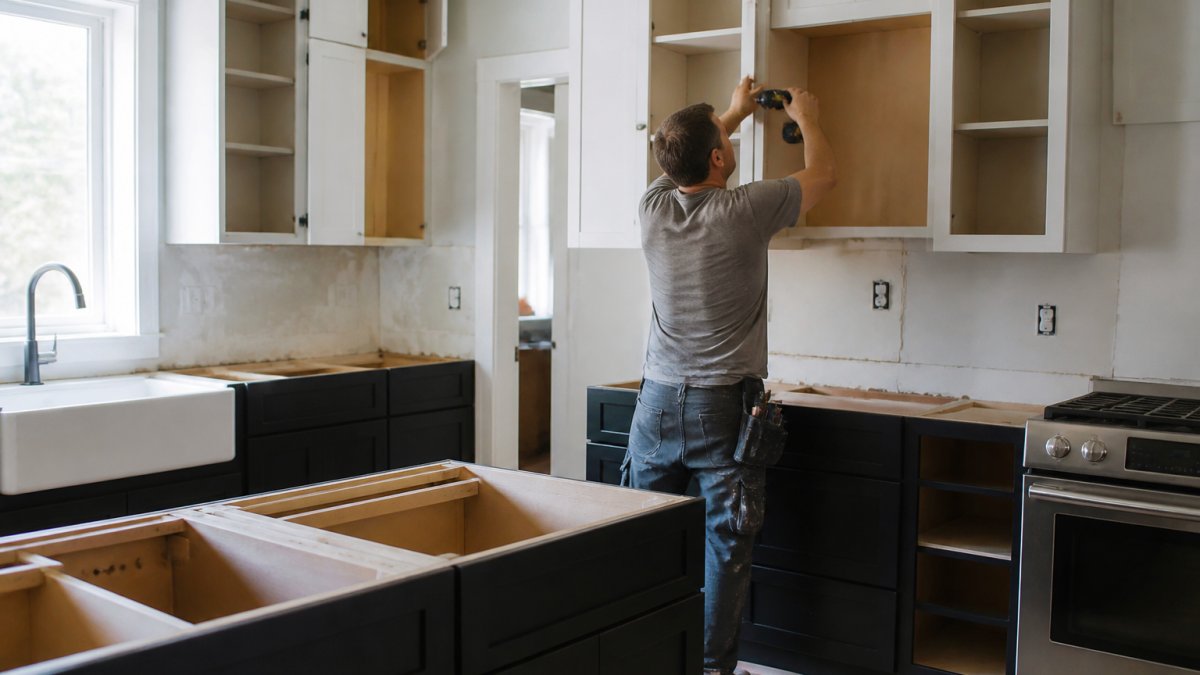
- Swapping cabinet hardware and faucets
- Installing a peel-and-stick or floating backsplash
- Changing light fixtures (with the breaker off)
Others are not. Gas lines, major electrical work, and plumbing reroutes belong to licensed pros. Get those wrong and you risk safety, code violations, and expensive rework.
A good rule: if the job involves water, gas, or a permit, call a professional. If it involves paint, hardware, or a screwdriver, you can likely handle it.
Surface Updates: Painting Cabinets, Refinishing Countertops, and New Hardware
Surface updates give you the biggest visual change for the smallest spend. This is the heart of any budget remodel.
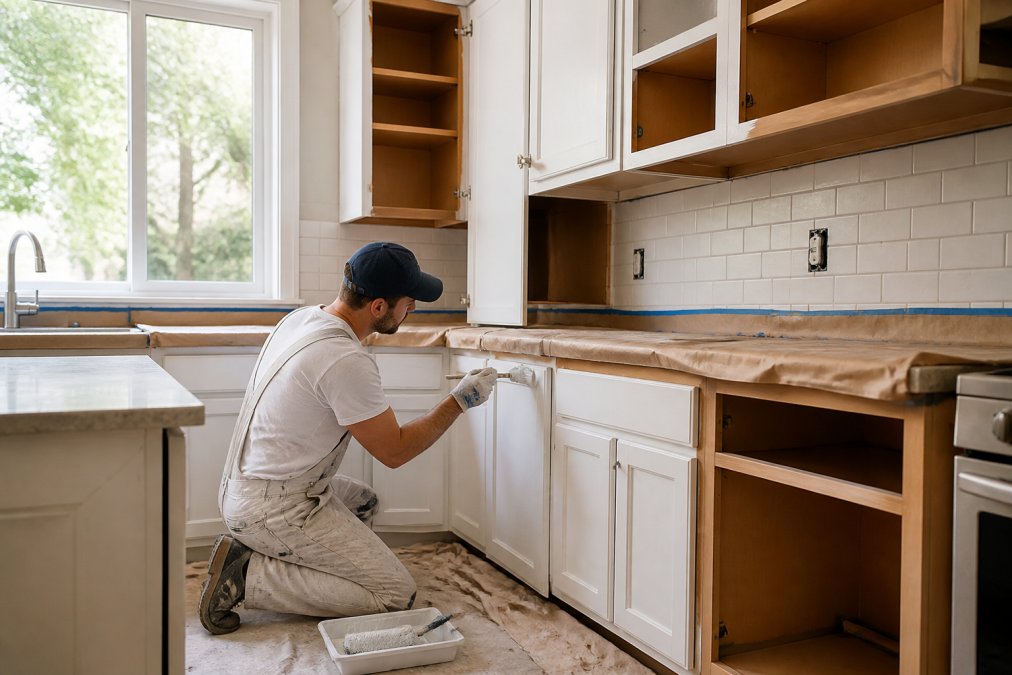
Painting cabinets is the single highest-impact DIY project in the kitchen. Clean, sand, prime, and paint. It takes a weekend and transforms the room.
Countertop refinishing is the budget alternative to replacement. A refinishing kit or a skilled pro can resurface existing counters for a fraction of new stone. It won't last as long as granite, but it buys you years at a low cost.
New hardware is the cheapest upgrade of all. New pulls and knobs can make dated cabinets look intentional and current.
- Paint: lowest cost, biggest change
- Refinish: moderate cost, buys time
- Hardware: tiny cost, instant polish
Together, these three moves can remake a tired kitchen without touching the layout.
Flooring, Backsplash, and Lighting on a Realistic Budget
Flooring, backsplash, and lighting are the finishing layers. They tie a budget kitchen together.
For flooring installation, luxury vinyl plank and laminate offer durability at low cost. They handle moisture and traffic well. Sheet vinyl is the cheapest option and works fine in a tight budget.
For the splashback, peel-and-stick tiles and pre-mounted mosaic sheets are DIY-friendly. They look sharp and install in an afternoon.
For lighting fixtures, swap dated fixtures for modern ones and add under-cabinet LED strips. These brighten workspaces and make the room feel bigger.
A cost-effective approach here is to update rather than replace. Keep what works, refresh what shows.
Permits, Structural Safety, and When You Need a Contractor
This is the part most budget guides skip. It's also the part that can wreck your savings if you ignore it. Getting the permitting and safety line right is what keeps a cheap remodel from becoming an expensive one.
How permitting actually works. A permit is local approval to do work that affects the structure, safety systems, or mechanical systems of your home. You apply, pay a fee, do the work, and then an inspector signs off. The inspection is the point: it confirms the work meets the locally adopted building, electrical, plumbing, and mechanical codes. Those codes are typically based on model codes that jurisdictions adopt and amend, so the exact rules vary by where you live, always confirm with your local building department before you start.
What usually triggers a permit:
- Moving or removing walls, especially load-bearing ones
- Adding, extending, or relocating electrical circuits and outlets
- Relocating or adding gas lines and appliances
- Changing or rerouting plumbing supply or drain lines
- Structural changes of any kind
What usually doesn't: painting, swapping cabinet hardware, replacing a faucet on existing supply lines, changing a light fixture on an existing circuit, and installing a peel-and-stick backsplash. Cosmetic swaps that don't touch the systems behind the wall are generally DIY territory.
Why skipping a permit is a bad trade. The fee you avoid is small compared to the downside:
- Failed inspection and forced rework. If work is discovered, you may have to open walls and redo it to code, at your cost, under time pressure.
- Resale problems. Unpermitted work surfaces during a buyer's inspection and can stall or kill a sale, or force a price reduction.
- Insurance risk. If unpermitted work contributes to a fire or water loss, a claim can be denied.
- Liability. Work that injures a future occupant can follow you.
The contractor vs. DIY line isn't about skill alone. It's about safety, code, and liability. Gas lines, panel upgrades, and plumbing reroutes belong to licensed pros, not because you can't learn the steps, but because a mistake is dangerous and often invisible until it fails.
A practical rule: if the job involves water, gas, structure, or a permit, hire a licensed professional and pull the permit. If it involves paint, hardware, or a screwdriver, you can likely handle it yourself. When in doubt, call your local building department and ask, that call is free, and it's the cheapest insurance a budget remodel can buy.
Material Sourcing and Longevity: Getting More Years Out of Every Dollar
Longevity is where a budget remodel wins or loses over time. Cheap materials that fail in two years aren't a bargain.
Material sourcing matters. Buy quality where it lasts and save where it doesn't. Spend on countertops, flooring, and appliances. Save on paint, hardware, and decor you can swap later.
Sustainability and durability often go together. Solid wood cabinets, quality vinyl plank, and well-built appliances last longer and need fewer replacements.
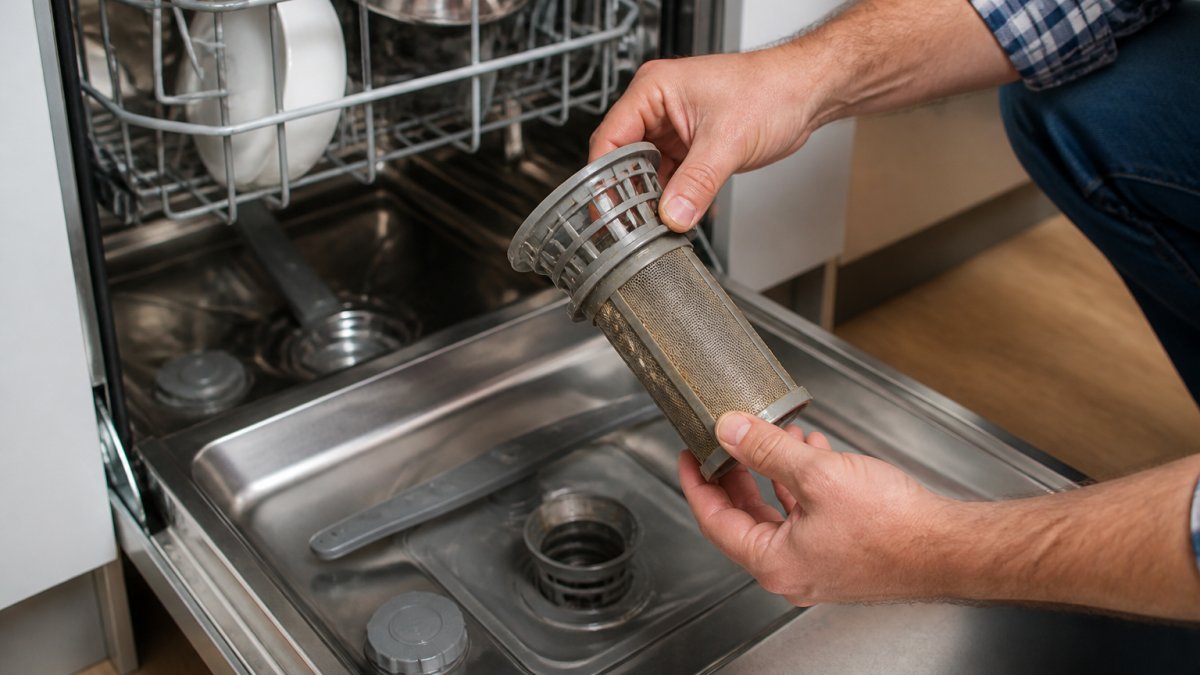
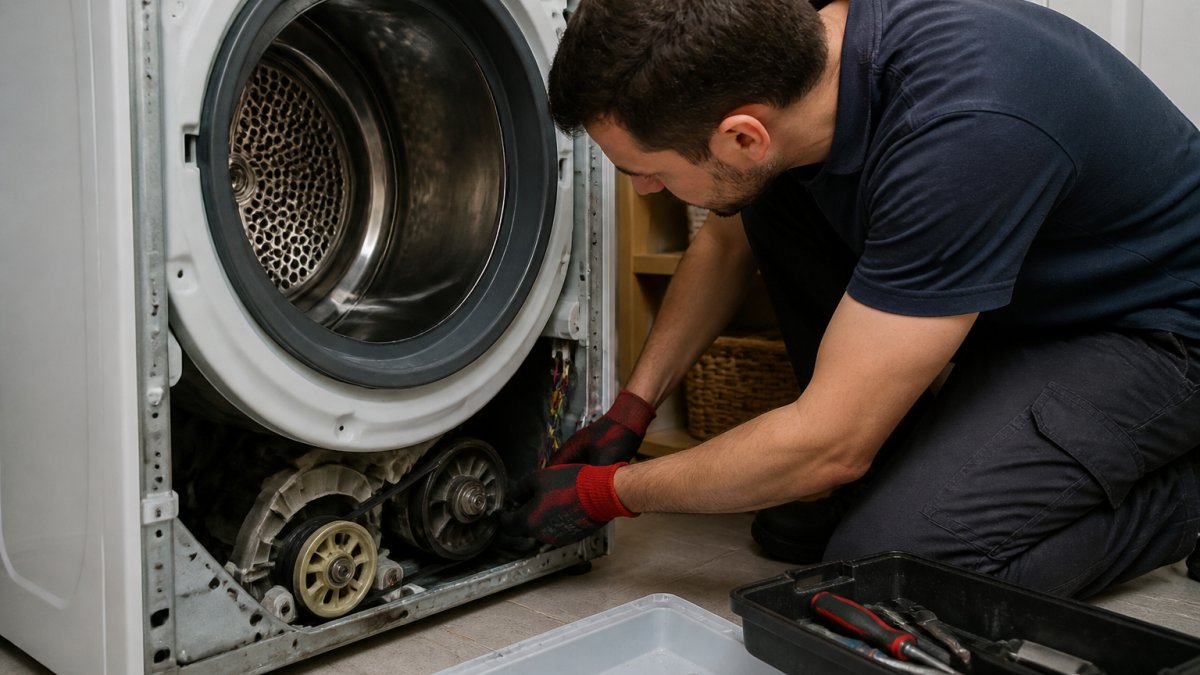
For appliances, longevity starts with care. Genuine replacement parts and timely service keep units running for years. At The Appliance Wizard, our factory-trained technicians provide in-home repair and maintenance, and we stock genuine parts for DIYers.
The U.S. Department of Energy guidance on appliance efficiency notes that maintaining appliances well also protects their energy performance over time. A well-kept kitchen holds its value longer.
Frequently Asked Questions
What is the least expensive way to remodel a kitchen?
Focus on cosmetic changes you can do yourself: paint the cabinets, swap out hardware, replace the faucet, and add a peel-and-stick backsplash. Refurbished or scratch-and-dent appliances from a local retailer can cut the biggest line item significantly. Skipping layout changes means no plumbing or electrical permits, which keeps labor costs low. Prioritize the surfaces you see and touch daily.
Are refurbished appliances a good choice for budget remodels?
Yes, when they come from a reputable dealer that services what it sells. Refurbished units are typically tested, cleaned, and backed by a warranty, so you get a working appliance at a lower cost than new. Ask about the warranty length and whether in-home service is included. For a budget remodel, putting savings from refurbished appliances toward installation or cabinetry gives you more finished kitchen per dollar.
How do I prioritize spending during a kitchen remodel?
Start with the items that are hardest to change later: layout, plumbing, and electrical. Then invest in the surfaces you interact with daily, like countertops and appliances. Save on cosmetic items such as cabinet paint, hardware, and lighting fixtures, which you can upgrade again in a few years. Keep a contingency of roughly 10 to 15 percent of your budget for surprises behind the walls.
What are the most cost-effective kitchen upgrades?
Cabinet paint, new hardware, updated lighting fixtures, a fresh backsplash, and a new faucet deliver visible change for the least money. Energy-efficient appliances can also lower utility bills over time. If your layout works, keeping it avoids the largest costs. Pairing DIY labor on cosmetic work with professional installation on appliances and electrical gives you the best mix of savings and safety.
A budget kitchen remodel is a challenge, but it's one you can win with the right plan. The Appliance Wizard makes the appliance side easy, with refurbished options, package deals, expert guidance, and flexible financing. Our team helps you pick the right units, installs them fast, and stands behind every purchase with in-home service. Get started with The Appliance Wizard and build a kitchen you'll love without overspending.