 how-to
How to Clean a Dishwasher Filter to Stop Smell Fast
Table of Contents
- Why a Dirty Dishwasher Filter Causes Smell
- Dishwasher Filter Cleaning Steps: A Safe Diagnostic Sequence
- How Often to Clean Dishwasher Filter for Best Results
- How to Remove Dishwasher Odor Beyond the Filter
- Common Mistakes to Avoid When Cleaning the Filter
- When to Call a Professional for Dishwasher Repair
- Preventive Habits to Keep Your Dishwasher Smelling Fresh
- Frequently Asked Questions
Last Updated: October 21, 2026
Why a Dirty Dishwasher Filter Causes Smell
A dirty dishwasher filter traps food and grease until bacteria break them down and release odor. The filter sits at the bottom of the tub and catches what the drain cannot swallow. When it clogs, that waste stays in warm, wet conditions between cycles.
That is the whole problem in one sentence. The smell is not a mystery, and it is rarely the machine's fault.
We see this constantly at The Appliance Wizard. A homeowner is ready to replace a dishwasher that only needs ten minutes of filter work. The U.S. Department of Energy guide to appliance maintenance makes the same point: small upkeep tasks prevent most premature failures.
How Food Particles and Grease Build Up
Every load leaves something behind. Coffee grounds, egg, rice, bits of lettuce, and cooking oil all pass through the filter mesh. Water flows on. The debris stays.
Grease is the worst offender. It cools inside the filter housing and turns sticky. Once sticky, it catches every particle that floats past. Layer by layer, the mesh closes up.
- Food scraps collect on the filter mesh
- Grease coats the mesh and hardens as it cools
- Bacteria feed on the trapped waste
- The smell spreads through the whole tub
- Water flow drops, so dishes come out gritty
The cycle feeds itself. Less flow means more residue left on dishes, and more residue means a faster clog next time.
Dishwasher Filter Cleaning Steps: A Safe Diagnostic Sequence
Cleaning a dishwasher filter takes about 15 minutes: remove it, rinse and scrub it, then reinstall and run a test cycle. Do the steps in order. Each one tells you something about the next, and each one has a clear pass/fail signal so you know whether to keep going or stop.
This sequence doubles as a diagnostic. If the smell survives all three steps, you have ruled out the filter and can look elsewhere. That saves you from guessing, and it keeps you from pulling the machine apart when the fix was a ten-minute rinse.
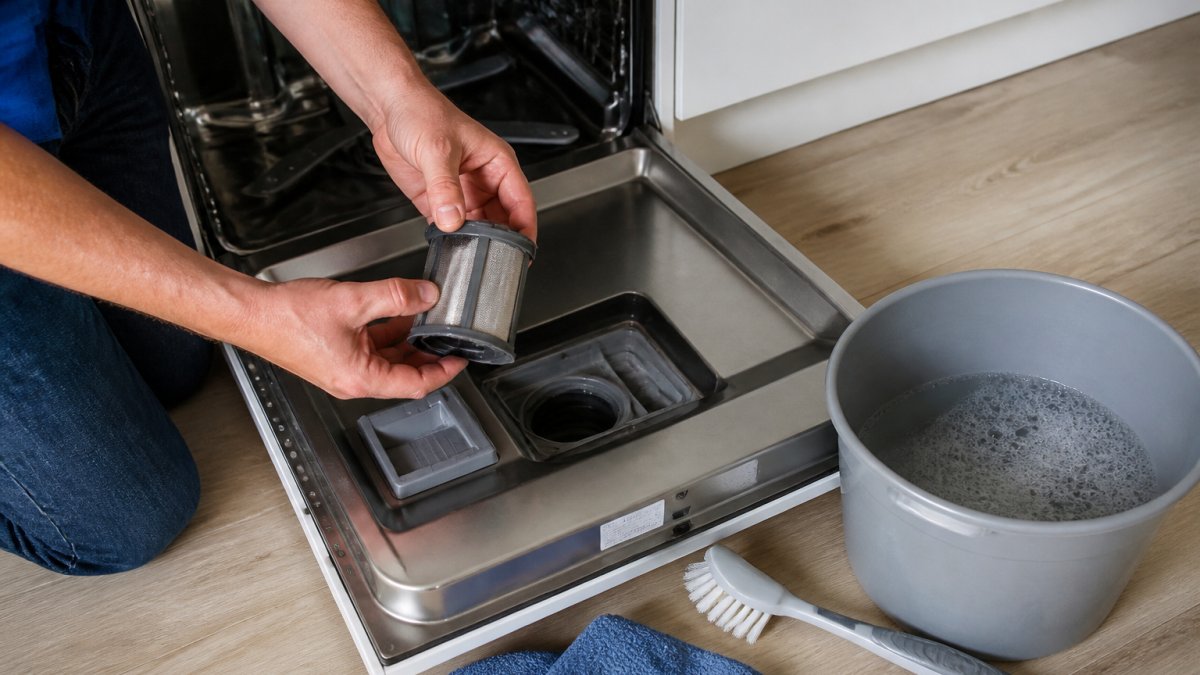
Before You Start: Safety and What You Need
Unplug the dishwasher or switch off the dedicated breaker before you reach into the tub. Water and a live heating element are a shock risk, and the sump area can hold standing water. Have a shallow pan or old towel ready, because pulling the filter often releases a cup or two of gray water onto the tub floor.
Gather four things: a soft brush (an old toothbrush is ideal), warm soapy water, a second bucket of clean warm water for rinsing, and a flashlight. Skip steel wool, scouring pads, and any abrasive powder. They scratch the mesh and the tub finish, and a scratched mesh lets debris straight through.
Step 1: Locate and Remove the Filter
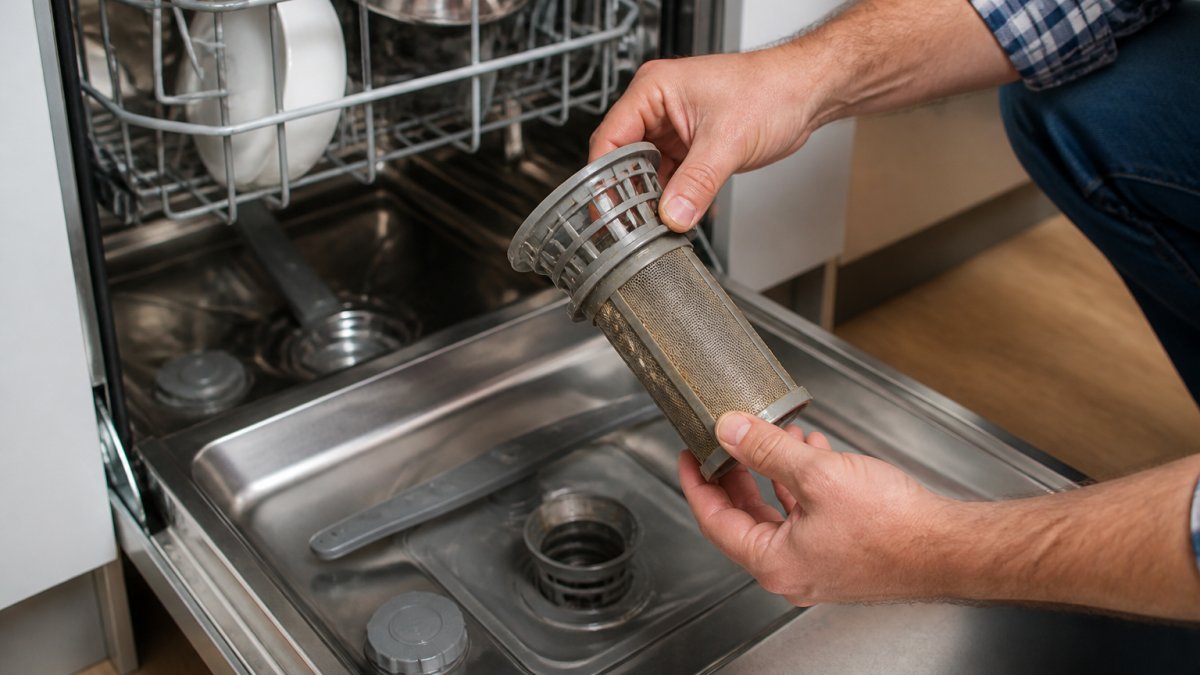
Pull out the bottom rack. The filter sits in the tub floor, usually a round cylinder or a flat screen near the spray arm. Twist the top handle counterclockwise, then lift the whole assembly out.
Most models split into two parts: a coarse outer basket and a fine mesh cylinder inside. Separate them. If either piece feels stuck, soak it in warm water for a few minutes rather than forcing it. Forcing a stuck filter cracks the plastic locking tabs, and a filter that will not lock back in is a bypass for food.
Pass/fail check: With the filter out, shine the flashlight into the sump. If you see standing water, food sludge, or a greasy film, note it. That tells you the drain path is part of the problem, not just the filter.
Step 2: Rinse, Soak, and Scrub
Hold the filter under warm running water and rinse from the inside out. Then soak both pieces in warm, soapy water for about ten minutes to loosen grease.
Use a soft brush on the mesh. Work in one direction along the mesh rather than scrubbing across it, which can bend the wires. Rinse again until water flows freely through the mesh.
- Rinse from the inside so debris pushes out, not deeper in
- Soak in warm soapy water to cut grease
- Scrub gently with a soft brush, along the mesh
- Rinse again until water flows freely through the mesh
Pass/fail check: Hold the mesh up to a light. If you can see through it evenly, it is clean. If light is blocked in patches, grease or scale is still coating it. Soak it again before reinstalling.
Step 3: Reinstall and Run a Test Cycle
Seat the filter back into its housing and twist clockwise until it locks. A filter that sits loose will let food past it and straight into the pump.
Run a rinse-only or short cycle with no dishes. Then open the door and smell the tub. A clean, neutral smell means the filter was your problem. A lingering odor points to the drain area, which we cover below.
Pass/fail check: After the test cycle, feel the mesh again. If water beads on the surface instead of passing through, grease is still coating it. Soak it again before reinstalling. If the tub still smells, move to the drain and gasket checks in the next section rather than repeating the filter clean.
How Often to Clean Dishwasher Filter for Best Results
Clean the dishwasher filter every one to two months for most households. Rinse it weekly if you cook from scratch often or pre-rinse heavily soiled pots. The more food that goes in, the faster the filter loads up.
A simple rule works well: rinse the filter every time you wipe down the counters. It takes under a minute and keeps grease from ever hardening.
Signs you are overdue:
- Dishes feel gritty after a full cycle
- Standing water sits in the bottom of the tub
- The smell returns within days of cleaning
- Glasses come out cloudy or spotted
The NSF guidance on household appliance sanitation is a useful reference for how often wet appliances need attention. Frequency matters more than intensity here. A quick rinse beats a deep scrub you keep putting off.
How to Remove Dishwasher Odor Beyond the Filter
If the filter is clean and the smell persists, the source is elsewhere in the machine. Two areas account for most leftover odors: the drain path and the door seals.
Work through both before you consider a repair call.
Check the Drain and Air Gap
Start at the bottom of the tub. Pull the filter again and look into the sump. Food and grease collect there, and a clogged drain lets wastewater sit and stagnate.
Next, find the air gap on the sink deck, if your setup has one. It is the small chrome cylinder beside the faucet. Pop the cap and clear any debris. A blocked air gap traps dirty water in the drain hose, and that water turns foul fast.
Clean Door Gaskets and Detergent Dispenser
Wipe the rubber gasket around the door with a damp cloth and mild soap. Food and moisture hide in the folds, and mold grows there quietly.
Then clean the detergent dispenser. Old powder or pod residue cakes up and holds odor. A soft brush and warm water clear it in a minute.
- Wipe the door gasket folds
- Scrub the detergent dispenser
- Check the bottom corners of the tub
- Run a hot cycle with a dishwasher cleaner
Common Mistakes to Avoid When Cleaning the Filter
The biggest mistake is skipping the filter entirely and reaching for a strong cleaner. Fragrance masks the smell for a few days. The bacteria keep feeding underneath.
Other errors we see often:
- Scrubbing with steel wool. It shreds the mesh and creates a permanent bypass for food.
- Reinstalling a wet, loose filter. It must lock into place or debris reaches the pump.
- Cleaning only the outer basket. The fine mesh inside does the real work.
- Using bleach on rubber parts. It degrades gaskets over time.
- Ignoring the filter between deep cleans. Weekly rinses prevent the problem entirely.
A common mistake is treating the filter as part of an annual deep clean. It is not. It is a routine task, like emptying the lint screen on your dryer.
When to Call a Professional for Dishwasher Repair
Call a technician when the filter is clean, the drain is clear, and the smell remains. That pattern usually points to a failing drain pump, a blocked internal hose, or a check valve that no longer seals. But "call a pro" is not a single decision. It helps to sort the problem into three buckets: clean it yourself, replace a part yourself, or stop and call.
The Three-Bucket Decision
Bucket 1: Clean it yourself. If the smell fades after a filter clean and a drain-path check, you are done. No service call needed. Most dishwasher odors fall here.
Bucket 2: Replace a part yourself. If the filter is clean and the drain is clear but water still pools or the machine hums without spraying, the likely culprit is a drain pump, a check valve, or an internal hose. These are replaceable parts on many models, and a confident DIYer with the model number can order the part and swap it. The trade-off is time and the risk of a wrong part; the upside is avoiding a service-call fee.
Bucket 3: Stop and call. Stop if you smell gas, see water leaking onto the floor near the electrical connection, or hear grinding from the pump. Those are safety and flood risks, not cleaning problems. Also call if the machine is still under a manufacturer warranty, because DIY work can void it.
Symptoms That Point to Service
- Water pools in the tub after a full drain cycle
- The machine hums but does not spray
- Dishes stay wet at the end of a cycle
- You hear grinding or rattling during the wash
- The smell returns within days of a thorough clean
What a Service Call Typically Involves
A technician will usually pull the filter and check the sump, test the drain pump and check valve, inspect the internal hose for a clog, and confirm the air gap and drain hose are clear. Parts availability varies by brand and model age, so ask whether the part is in stock before booking.
DIY Versus Professional: A Simple Rule
If the fix is cleaning, do it yourself. If the fix is a single bolt-on part and you are comfortable with basic tools, DIY is reasonable. If the diagnosis is unclear, the machine is under warranty, or the symptom involves water near electrical components, call a professional. That rule keeps you out of the two failure modes that cost the most: paying for a service call you did not need, and turning a small repair into a flooded floor.
Our factory-trained technicians handle in-home repair across most major makes and models. If the fix is a genuine replacement part, we stock those too, so DIYers can handle the job themselves. Kevin Chapman told us our team has talked him through troubleshooting by phone rather than pushing a new unit. That is how we prefer to work.
If the machine is genuinely past saving, our showrooms in Marion and Carbondale carry new and refurbished dishwashers, with financing available. Stop by or schedule service online.
Preventive Habits to Keep Your Dishwasher Smelling Fresh
Five habits keep the smell from coming back. None of them take more than a minute.
- Scrape plates into the trash before loading. Skip the pre-rinse; modern machines handle the rest.
- Rinse the filter weekly under warm water.
- Run a hot cycle with a dishwasher cleaner once a month.
- Wipe the door gasket every few weeks.
- Leave the door cracked between cycles so the tub dries out.
Load size matters too. An overloaded rack blocks spray arms and leaves food behind, which feeds the filter faster. Give dishes room and point soiled surfaces toward the center.
| Problem | Likely Cause | Fix | How Often |
|---|---|---|---|
| Foul smell from tub | Clogged filter mesh | Remove, soak, scrub, reinstall | Every 1-2 months |
| Gritty dishes after cycle | Grease-coated filter | Soak in warm soapy water | Weekly rinse |
| Standing water in tub | Blocked drain or sump | Clear sump and air gap | As needed |
| Musty odor near door | Mold in gasket folds | Wipe with mild soap | Every few weeks |
| Smell returns in days | Drain hose or pump issue | Call a technician | Once, if it persists |
A dishwasher that smells is telling you something, and it is almost never "replace me." Clean the filter, clear the drain path, and wipe the seals. Most machines come back to life in an afternoon.
When the smell outlasts those steps, The Appliance Wizard can help. Our certified technicians provide in-home repair across most major brands, we stock genuine replacement parts for DIYers, and our Marion and Carbondale showrooms carry new and refurbished dishwashers with flexible financing. Get started with The Appliance Wizard and get your kitchen back to smelling like nothing at all.
Frequently Asked Questions
How often should you clean a dishwasher filter?
Clean the filter every one to three months, depending on use. Households that run the dishwasher daily or pre-rinse heavily should clean it monthly. A quick rinse under warm water takes about two minutes. If you notice a smell or dishes come out gritty, check the filter right away. Mark it on your calendar or tie it to a monthly kitchen task so it does not get skipped.
Can you use vinegar to clean a dishwasher filter?
Yes. A 50/50 mix of white vinegar and warm water works well for soaking the filter for 10 to 15 minutes. Vinegar helps break down grease and mineral film. After soaking, scrub with a soft brush and rinse thoroughly. Do not soak the filter in bleach or harsh chemicals, which can damage plastic components. For tough odor, a paste of baking soda and water applied with a soft brush is another safe option.
Why does my dishwasher still smell after cleaning the filter?
The filter is only one source. Check the drain hose, air gap, door gasket, and detergent dispenser for trapped food or mold. Run a hot cycle with a dishwasher cleaner or a cup of vinegar placed on the top rack. Also inspect the bottom sump area for standing water. If odor persists after these steps, a technician can check for a blocked drain pump or a failing check valve.
Can a clogged dishwasher filter cause a bad smell?
Yes. A clogged filter traps food particles and grease, which bacteria break down and produce hydrogen sulfide gas, the rotten-egg smell. It also restricts water flow, leaving dishes less clean and the interior damp. Cleaning the filter is the first and easiest fix. If the filter is damaged or cracked, replace it with a genuine part for your model.