 how-to
Finding Genuine Appliance Replacement Parts: A 2026 Guide
Table of Contents
- How to Find Your Appliance Model Number
- OEM vs Aftermarket Appliance Parts: What's the Real Difference?
- Warranty Implications of Non-OEM Parts
- Tools You'll Need Before Starting Any Repair
- How to Identify the Right Part Using Schematics and Cross-References
- Where to Buy Genuine Appliance Replacement Parts You Can Trust
- Repair or Replace? A Cost-Benefit Guide for Older Appliances
- Refurbished and Sustainable Parts: A Smarter Option for Some Repairs
- Conclusion
- Frequently Asked Questions
Last Updated: September 19, 2026
How to Find Your Appliance Model Number
Finding genuine appliance replacement parts starts with one number: your model number. Without it, you are guessing, and guessing leads to wrong parts, wasted money, and extra trips to the hardware store. This guide from The Appliance Wizard walks through every step, from reading the data plate to spotting counterfeits.
The model number is the exact identifier for your appliance. It tells a parts supplier which version you own, since manufacturers often change internal components mid-production without changing the outer design.
Where to Look on Refrigerators, Ranges, and Washers
On most refrigerators, the model and serial number plate sits inside the fresh food compartment. Check the upper left or right wall, or behind the crisper drawer.
For ranges and ovens, open the oven door and look at the frame around the opening. You may also find it on the back panel or under the storage drawer.
Washers and dryers hide their plates in a few common spots:
- Inside the door opening or on the door frame
- Behind the top control panel
- On the back of the unit near the water inlet
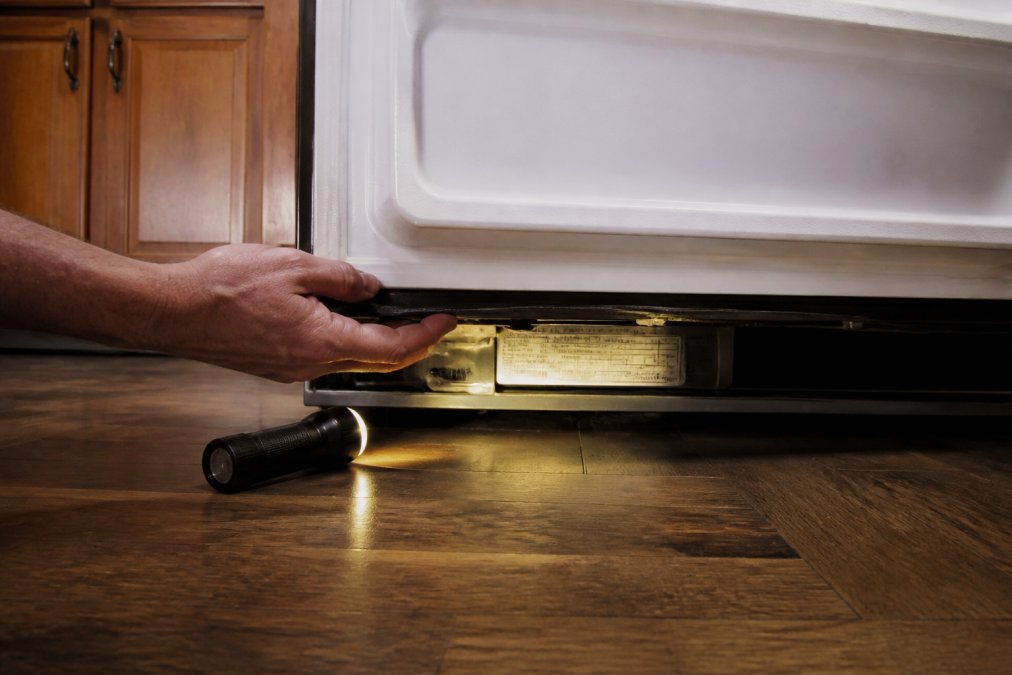
Reading the Model and Serial Number Plate
The model number tells you what you own. The serial number tells you when it was built. Both matter for parts.
A common mistake is copying the serial number by accident. Serial numbers are longer and often mix letters and digits. Model numbers tend to be shorter and follow a pattern tied to the brand.
Write both down exactly as printed. One wrong digit means the wrong part.
OEM vs Aftermarket Appliance Parts: What's the Real Difference?
OEM stands for original equipment manufacturer. OEM parts are made by or for the company that built your appliance. Aftermarket parts come from third parties and are made to fit, not made by the original brand.
The difference shows up in three places: fit, materials, and warranty.
OEM parts match the original spec because they are the original spec. Aftermarket parts vary widely. Some are excellent. Many are not. A generic heating element may use a thinner sheath alloy than the OEM version, which shortens its service life. A knockoff control board may skip conformal coating, leaving it vulnerable to moisture. These differences rarely show up on the spec sheet, but they show up in the appliance.
How to Spot Counterfeit Parts Before You Buy
Counterfeit parts look real at a glance. Look closer and the cracks show. Most sellers do not teach this because they would rather you just buy, so this is where you have to do your own homework.
Packaging tells:
- Blurry or pixelated logos, or brand names with swapped letters (a common trick is changing one character in a well-known name)
- Fonts that do not match the manufacturer's standard typeface
- Missing or mismatched part numbers between the box, the label, and the part itself
- No manufacturer address, phone number, or website printed anywhere
- Seals, holograms, or lot codes that look photocopied rather than embossed or printed with a security pattern
Part-level tells:
- Mold seams, flashing, or rough edges where the OEM part would be smooth
- Plastic that smells strongly of solvents or feels unusually brittle
- Wiring that is thinner gauge than the original, or connectors that fit loosely
- No stamped or laser-etched part number on the component itself
- Paint or plating that flakes off with a fingernail
Seller-level tells:
- Prices far below every other seller, a genuine OEM part rarely sells for a fraction of the going rate
- Stock photos instead of photos of the actual part
- No warranty card or manufacturer contact info in the box
- Seller cannot provide a schematic diagram match or cross-reference your model number
- Listings that use vague terms like "fits many models" instead of an exact model compatibility list
A genuine part has a traceable part number. If a seller cannot cross-reference that number to your model, walk away. When in doubt, call the manufacturer's parts line directly and ask them to confirm the part number, they will tell you whether the number you have is real and whether the seller is an authorized source.
When Aftermarket Parts Are Actually Fine
Not every non-OEM part is a bad choice. Aftermarket makes sense when:
- The part is a simple mechanical item (a knob, a shelf clip, a door bin) where fit is the only thing that matters
- The OEM part is discontinued and no new-old-stock exists
- You are repairing an appliance you plan to replace soon and want to minimize cost
Aftermarket is a poor choice when:
- The part is safety-critical (gas valves, thermal cutoffs, heating elements)
- The appliance is under warranty
- The part controls a major system (compressor, main control board, inverter)
If you go aftermarket, buy from a seller with a clear return policy and a stated compatibility guarantee. That way, if the part does not fit or fails early, you are not stuck.
Warranty Implications of Non-OEM Parts
Using non-OEM parts can void your warranty coverage. Most manufacturers require genuine parts for any covered repair. If a non-OEM part causes a failure, the manufacturer can deny the claim.
This matters most during the first year, when the factory warranty is active. After that, the risk shifts to you.
Check your warranty terms before you buy anything. Look for language about "authorized parts" or "genuine components."
Some extended warranties are stricter than the factory one. Read the fine print on both.
If your appliance is still under warranty, use OEM parts. The small savings on aftermarket are not worth losing coverage.
Tools You'll Need Before Starting Any Repair
Most appliance repairs need fewer tools than people expect. But the right tools prevent damage and make the job safer.
Basic kit:
- Nut drivers in common sizes
- Phillips and flathead screwdrivers
- Adjustable wrench
- Pliers, both needle-nose and standard
- Multimeter for testing electrical components
- Flashlight or headlamp
For specific jobs:
- Putty knife for prying panels
- Wire strippers for electrical work
- Torque wrench for gas connections
Electrical safety comes first. Unplug the appliance before you touch anything inside. For gas appliances, shut off the gas supply and know when to call a professional.
If a repair involves gas lines or complex wiring, stop. That is a job for a certified technician.
How to Identify the Right Part Using Schematics and Cross-References
A schematic diagram is a drawing of your appliance with every part numbered. Manufacturers publish these for most models.
Find your model number, then look up the schematic for that exact model. Match the part number on the diagram to the part you need.
Cross-referencing helps when a part is discontinued. A cross-reference chart shows which newer part replaces the old one.
Part identification steps:
- Confirm your model and serial number
- Pull the schematic for that model
- Find the failed component on the diagram
- Note the part number exactly
- Cross-reference if the part is discontinued
- Verify compatibility before ordering
An exploded view shows how parts fit together. It is useful when you are not sure which component failed.
Where to Buy Genuine Appliance Replacement Parts You Can Trust
Buy from sellers who can verify part numbers against your model. That is the single best filter. But "trustworthy seller" is not a vibe, it is a set of verifiable signals you can check before you spend money.
The Four Legitimate Channels
1. Manufacturer-authorized dealers. Every major appliance brand maintains a list of authorized parts dealers on its website. Look for a "Where to Buy" or "Find a Dealer" link in the support section. Authorized dealers can pull up your model number and confirm the exact part. They also honor the manufacturer's parts warranty.
2. Brand-direct parts portals. Most manufacturers sell parts directly through their own online stores. Prices are usually at or near list, but you get a guaranteed genuine part and a clean return process. This is the safest channel when the part is expensive or safety-critical.
3. Independent appliance repair shops with parts counters. Local repair shops often stock common OEM parts and will sell to DIYers. The advantage is that you can bring your model number in and have a technician physically match the part. The disadvantage is limited inventory, call ahead with your model and part number.
4. Established online parts retailers. Large online parts retailers carry deep OEM inventory and publish compatibility tools. Look for a site that lets you enter your model number and filters results to only parts that fit. Avoid marketplace listings where the seller is a third party with no stated authorization.
How to Verify a Seller Before You Buy
- Ask for the part number and cross-reference it against your model on the manufacturer's own site
- Confirm the seller is listed as an authorized dealer on the manufacturer's website
- Check the return policy, a genuine parts seller will accept returns on unopened parts, usually within 30 days
- Confirm the part carries a manufacturer warranty, not just a seller warranty
- Look for a phone number you can call and a real address, not just a contact form
Questions to Ask Any Seller
- Can you confirm this part fits my model number?
- Is this OEM or aftermarket?
- Is this part covered by the manufacturer's warranty?
- What is the return policy if it does not fit, and who pays return shipping?
- Do you have it in stock, or is it a special order?
Shipping, Stock, and Speed
Stock status matters when your refrigerator is down and food is spoiling. Most authorized dealers and brand-direct portals offer standard ground shipping in three to seven business days, with expedited options at a premium. Local parts counters and repair shops are the fastest option if they have the part on the shelf, same-day pickup beats any shipping estimate.
Before you order, ask two questions: Is this in stock at your warehouse, or are you drop-shipping it from the manufacturer? And what is the cutoff time for same-day shipment? A part that is "in stock" but ships in five days is not actually in stock for your purposes.
Red Flags That Should End the Conversation
- The seller cannot or will not confirm the part number against your model
- The price is dramatically lower than every other source
- The listing uses generic photos and vague compatibility language
- There is no return policy, or returns are "final sale"
- The seller cannot tell you whether the part is OEM or aftermarket
If any of those show up, move on. There is no shortage of legitimate sellers, you do not need to gamble on a questionable one.
Repair or Replace? A Cost-Benefit Guide for Older Appliances
The repair-or-replace call comes down to three factors: age, repair cost, and remaining life.
A simple rule many technicians use: if the repair costs more than half the price of a new unit, and the appliance is past its expected lifespan, replace it. If the appliance is young and the repair is small, fix it.
| Factor | Lean Repair | Lean Replace |
|---|---|---|
| Appliance age | Under half its expected life | Past expected life |
| Repair cost | Small share of new unit price | Over half of new unit price |
| Part availability | Genuine parts in stock | Parts discontinued |
| Energy use | Matches current standards | Much higher than new models |
| Frequency of breakdowns | First issue | Third or fourth issue |
Expected lifespan varies by type. Refrigerators and ranges often last longer than washers and dryers. Dishwashers fall somewhere in the middle.
Keep a simple log of repairs. If you are fixing the same appliance every year, the math favors replacement.
Refurbished and Sustainable Parts: A Smarter Option for Some Repairs
Refurbished parts and appliances keep working units out of landfills. For some repairs, a refurbished component is a smart, budget-friendly choice.
Refurbished does not mean broken. A properly refurbished part has been tested, cleaned, and confirmed to work. The key word is "properly."
When refurbished makes sense:
- The part is discontinued and no new stock exists
- The appliance is older and you want to extend its life
- Budget is tight and the part is not safety-critical
When to avoid refurbished:
- Safety components like gas valves or heating elements
- Parts under active warranty
- Any part with no testing record
Sustainability matters here. Repairing instead of replacing reduces waste and saves money at the same time.
Conclusion
A wrong part wastes time, money, and patience. Getting the model number right, choosing OEM when warranty coverage matters, and buying from a seller who verifies fit solves most of the problem. The Appliance Wizard stocks genuine replacement parts, offers expert troubleshooting and product advice, and provides in-home repair from factory-trained, certified technicians. Visit our Marion or Carbondale showroom or go to www.theappliancewizard.com to check stock, confirm a part number, or schedule service.
Frequently Asked Questions
How do I know if an appliance part is OEM?
Check the part number against the manufacturer's official schematic for your model. Genuine OEM parts arrive in branded packaging with the manufacturer's logo, a verifiable part number, and often a holographic seal. If the price seems unusually low or the packaging looks generic, it's likely aftermarket or counterfeit. You can also cross-reference the part number on the manufacturer's website or call a trusted local parts supplier to confirm authenticity before installing.
Are aftermarket appliance parts safe to use?
Some aftermarket parts work fine, but quality varies widely. Critical components like heating elements, control boards, and gas valves carry real safety risks if they fail. Non-OEM parts can also void your manufacturer warranty on the entire appliance, not just the replaced component. For high-voltage or gas-related repairs, stick with genuine appliance parts. For cosmetic pieces like door bins or knobs, aftermarket options are usually fine.
What is the 50/50 rule for appliances?
The 50/50 rule is a common guideline: if the repair cost exceeds 50% of the price of a new appliance, replacement usually makes more financial sense. For example, a $600 repair on a $900 washer crosses that threshold. However, this rule works best for appliances over 8 years old. A newer appliance with a costly repair may still be worth fixing, especially if it's under warranty or you purchased an extended service plan.
Where can I buy genuine OEM parts?
You can buy genuine appliance parts directly from the manufacturer's website, authorized local dealers, or trusted repair shops that stock OEM inventory. Local parts suppliers often provide same-day pickup and can cross-reference your model number to confirm compatibility before you leave the counter. Avoid unfamiliar third-party marketplaces where counterfeit parts are common. If you're unsure which part you need, bring your model number to a supplier and ask them to pull the schematic diagram for your specific appliance.