 how-to
How to Find Appliance Warranty Service: 2026 Guide
Table of Contents
- Step 1: Gather Your Appliance Documentation
- Step 2: Locate the Model and Serial Numbers
- Step 3: How to Check Appliance Warranty by Serial Number
- Step 4: Understand What Does a Manufacturer Appliance Warranty Cover
- Step 5: How to File a Warranty Claim for Appliances
- Step 6: Schedule Service With a Technician
- Extended Protection Plans vs. Standard Warranties
- Common Warranty 'Void' Triggers to Avoid
- Warranty Transferability and Third-Party Service Options
- Frequently Asked Questions
Last Updated: September 23, 2026
Step 1: Gather Your Appliance Documentation
The fastest way to find appliance warranty service starts long before anything breaks. It starts with a folder. According to the Federal Trade Commission's consumer guidance on warranties, written warranties are legally required to be available for inspection before you buy, which means you should already have the paperwork. Most people don't.
Here's the thing most guides get wrong: they tell you to "find your warranty" as if it's one document. It isn't. Warranty service runs on a paper trail, and missing pieces slow everything down.
The Documentation Checklist You Actually Need
Pull these items together now, before a failure happens:
- Original sales receipt or order confirmation email
- Model and serial numbers written down
- Owner's manual with the warranty page bookmarked
- Delivery and installation paperwork
- Registration confirmation, if you registered the product
- Any extended protection plan contract
- Photos of the data plate and the receipt saved to your phone
A common mistake is tossing the receipt because the store "has it on file." Stores close. Systems change. Your receipt is your proof of purchase, and without it, a warranty claim can stall for weeks.
Step 2: Locate the Model and Serial Numbers
The model and serial numbers are your warranty keys. Every manufacturer uses them to look up coverage, so find them before you call anyone.
They live on a data plate, a small sticker or metal tag attached to the appliance. The plate lists the model number, serial number, and often the manufacture date.
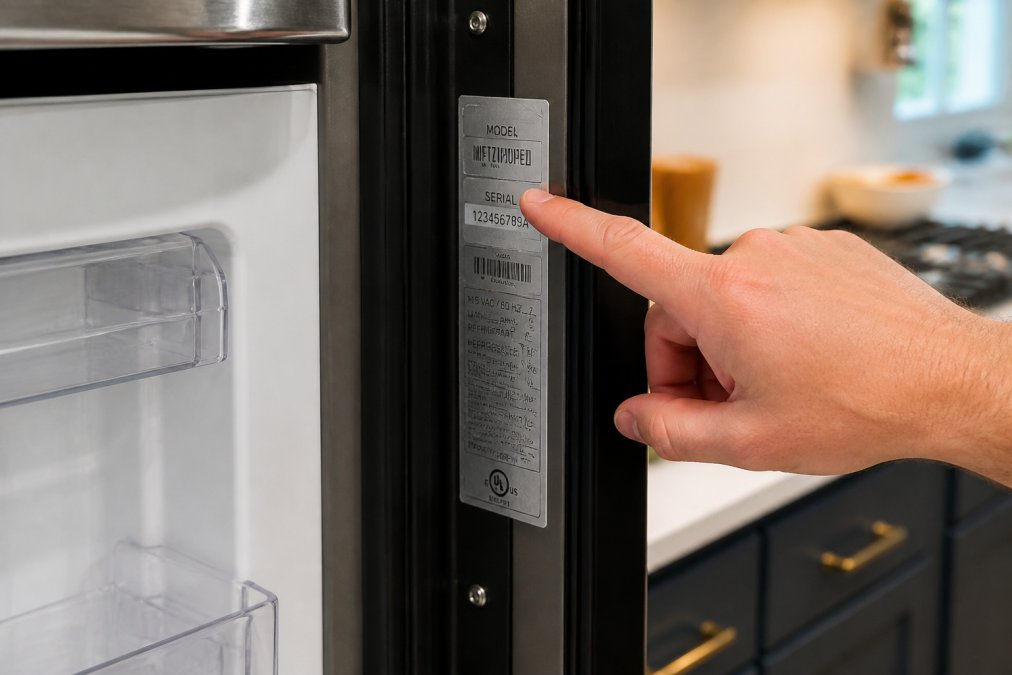
Where to Find the Data Plate on Major Appliances
Locations vary by type. Here's where to look:
- Refrigerators: inside the fresh food compartment, on an interior wall
- Ranges and ovens: behind the storage drawer or on the oven door frame
- Dishwashers: on the door edge or the tub frame, visible when open
- Washers and dryers: behind the door, on the lid frame, or on the back panel
- Microwaves: on the back or the inside of the door frame
Write both numbers down exactly. One wrong digit can send a service request to the wrong place.
Step 3: How to Check Appliance Warranty by Serial Number
Checking appliance warranty by serial number is the step that tells you whether you're covered, and it takes about five minutes. Most major manufacturers offer a warranty lookup tool on their website. You enter the serial number, sometimes the model number too, and the system returns your coverage period and expiration date.
A few things to keep ready:
- The serial number, copied exactly
- Your purchase date
- Your ZIP code, since service networks vary by area
If the online lookup fails, call the manufacturer's customer care line. Have your proof of purchase nearby. A service technician can't start a repair portal entry without confirmed warranty status.
Step 4: Understand What Does a Manufacturer Appliance Warranty Cover
Knowing what a manufacturer appliance warranty covers prevents nasty surprises at the service visit. A limited warranty is the standard coverage most appliances carry. It promises to fix defects in materials or workmanship for a set coverage period, starting from the purchase date.
What's typically included:
- Defects present from manufacturing
- Failures under normal household use
- Parts and labor, on many major components, during the base period
Parts and Labor: What's Included and What Isn't
This is where homeowners get tripped up. Many warranties cover parts and labor fully for the first year, then shift to parts-only coverage for longer periods on certain components, like the compressor or the sealed refrigeration system.
What's usually not covered:
- Damage from misuse, drops, or power surges
- Cosmetic wear like scratches and dents
- Routine appliance maintenance and cleaning
- Labor costs after the labor period ends
Read your warranty page carefully. The coverage period for each component is spelled out there.
Step 5: How to File a Warranty Claim for Appliances
Filing a warranty claim for appliances follows a predictable path. Follow it in order and you'll avoid most delays.
- Confirm your coverage using the serial number lookup.
- Gather your proof of purchase and documentation checklist.
- Contact the manufacturer's customer care line or use their online claim submission.
- Describe the component failure clearly and note when it started.
- Get a claim or reference number and write it down.
- Ask whether the repair goes through an authorized service provider.
Keep every email and reference number. If the claim drags on, that paper trail is your use.
Step 6: Schedule Service With a Technician
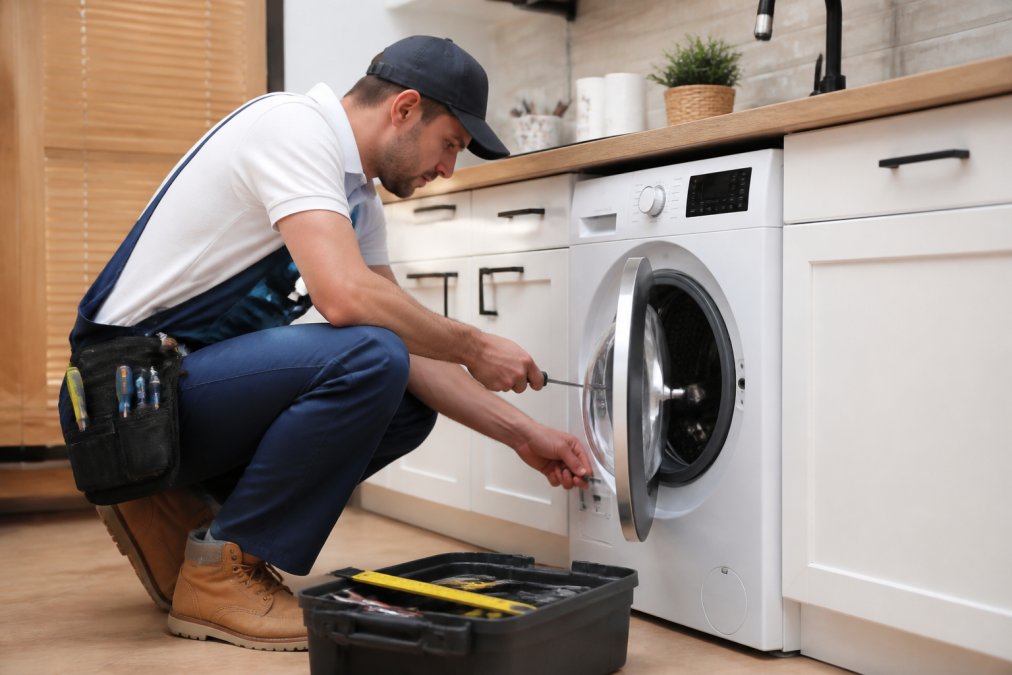
Once your claim is approved, the manufacturer routes you to an authorized service provider. You'll schedule a service request, and a service technician will come to your home for diagnosis and repair.
Before the visit:
- Clear access to the appliance
- Have your claim number ready
- Note any troubleshooting you already tried
- Ask about a diagnostic fee, which some providers charge if the issue turns out not to be covered
In-home repair is standard for large appliances. For smaller units, you may be asked to bring the item to a service center instead.
This is also where a local provider makes a difference. The Appliance Wizard's factory-trained, certified technicians provide timely, professional in-home repair, maintenance, and warranty support across most major appliance makes and models.
| Situation | Best First Move | What to Have Ready |
|---|---|---|
| Appliance under 1 year old | Call manufacturer customer care | Receipt, serial number |
| Coverage status unknown | Run serial number lookup | Model and serial numbers |
| Claim approved, need repair | Schedule with authorized provider | Claim number, clear access |
| Receipt lost | Contact retailer or manufacturer | Order email, bank statement |
Extended Protection Plans vs. Standard Warranties
An extended protection plan is a service contract you buy, separate from the manufacturer's warranty. It kicks in after the standard coverage ends.
The difference matters. A standard warranty is included with your purchase and covers defects. An extended protection plan is optional coverage you pay for, and its terms vary by seller.
When an extended plan makes sense:
- The appliance has expensive components prone to failure
- You plan to keep it well past the base warranty
- The plan covers parts and labor with no hidden loopholes
When it doesn't:
- The appliance is inexpensive to replace
- The plan duplicates coverage you already have
- The terms exclude the failures you're most worried about
Common Warranty 'Void' Triggers to Avoid
Warranties don't vanish for no reason, but a handful of user actions routinely give manufacturers grounds to deny a claim. The key is understanding how each trigger works, not just memorizing a list, because the fix is different in every case.
The Triggers and the Mechanism Behind Each
- Unauthorized repairs or DIY teardowns. Opening a sealed system or replacing a control board yourself can void coverage on the affected component. The mechanism: the manufacturer can't verify the failure wasn't caused by the repair. Note that under the Magnuson-Moss Warranty Act, a manufacturer generally cannot void your entire warranty just because you used a third-party part or servicer, it must show the part or service caused the failure. In practice, though, disputes over causation are slow and expensive, so most owners still route covered repairs through authorized providers.
- Improper installation. A bad water line on a refrigerator, a dryer vented incorrectly, or a dishwasher not leveled can cause damage the manufacturer classifies as installation-related, not a defect. That distinction is the whole ballgame: defects are covered, installation damage usually isn't.
- Skipped required maintenance. If your owner's manual specifies an action, cleaning a dryer vent, replacing a water filter on schedule, descaling a steam oven, and the failure traces back to skipping it, the claim can be denied. Keep a simple log of when you did each task.
- Misuse and environmental damage. Overloading a washer, running an appliance on the wrong voltage, ignoring repeated error codes, or damage from a power surge typically falls outside defect coverage. A whole-home surge protector is cheap insurance here.
- Removed or unreadable serial tags. Without a legible data plate, the manufacturer cannot verify the unit's age or coverage window. If a tag peels off, photograph it before it's gone and ask the manufacturer to note the serial on your account.
- Unauthorized resale or commercial use. Many residential warranties exclude appliances used in rental properties, laundromats, or other commercial settings. If you rent out the home, check the warranty language before assuming coverage.
If You've Already Tripped a Trigger
Don't assume the claim is dead. A common pattern is that owners who can document the timeline, receipt, installation paperwork, maintenance log, and a clear description of when the failure started, still get coverage approved on a goodwill or partial basis. Ask the manufacturer's customer care line specifically whether the denial is based on the trigger or on the failure itself, and request the denial in writing. That written reason is what you'd use if you escalate to the manufacturer's consumer relations department or, in some cases, your state attorney general's consumer protection office.
The Preemptive Move
Keep a one-page log for each appliance: purchase date, installer, serial number, and dates of any required maintenance. If a dispute ever arises, that log is the difference between a quick approval and a weeks-long back-and-forth.
Warranty Transferability and Third-Party Service Options
Two scenarios trip up more appliance owners than any other: buying a used appliance or a home with appliances included, and deciding whether to use an independent repair shop. Neither is covered well by manufacturer support pages, and both have real money attached.
Does the Warranty Transfer When You Sell or Buy?
It depends on the brand and the specific warranty document, and the difference is not cosmetic. Some manufacturers allow the remaining coverage to transfer to a new owner at no cost; others require a transfer form and sometimes a fee within a set window after the sale; still others limit coverage to the original purchaser only.
The mechanism matters because a transferable warranty is effectively a resale asset. If you're selling an appliance that still has two years of sealed-system coverage, that's worth mentioning in the listing. If you're buying, it's worth asking for before you agree on price.
What to collect when buying a used appliance or a home with appliances:
- Original sales receipt or order confirmation
- Model and serial numbers (photograph the data plate)
- The warranty document itself, not just a verbal assurance
- Any transfer form the manufacturer requires, completed and dated
- Registration confirmation, if the original owner registered the product
- Any extended protection plan contract and its transfer rules
If the seller can't produce the receipt, call the manufacturer's customer care line with the serial number. Many can confirm the in-service date from their own records, which is often enough to establish the coverage window even without paper.
Authorized Service vs. Independent Repair: What Actually Voids Coverage
This is where owners make expensive assumptions. The short version:
- For a repair you want covered under warranty, use a manufacturer-authorized service provider. The manufacturer pays the provider directly, and the claim stays intact.
- For an out-of-warranty repair, an independent shop is often faster, more flexible on scheduling, and sometimes cheaper on labor. It does not void a warranty that has already expired.
- For a repair on a still-covered appliance done by an independent shop, you're taking a risk. Under the Magnuson-Moss Warranty Act, a manufacturer generally can't void your warranty simply because a third party did the work, but it can deny coverage for a specific failure if it can show the third-party work caused it (FTC says companies’ warranty restrictions were illegal). In practice, that dispute is hard to win without documentation.
A practical rule most service professionals follow: if the appliance is under warranty and the failure looks like a defect, go authorized. If it's out of warranty, or the failure is clearly wear-and-tear, an independent shop is a reasonable choice.
Questions to Ask Any Service Provider Before You Book
- Are you authorized by the manufacturer for this brand?
- Do you charge a diagnostic fee, and is it credited toward the repair?
- Will you provide a written estimate before starting work?
- What's your warranty on the repair itself, and for how long?
- Do you use OEM parts, and will that be noted on the invoice?
That last question matters more than most owners realize. Non-OEM parts aren't automatically disqualifying, but if a replacement part fails and the manufacturer can trace the failure to a non-OEM component, the claim on that component can be denied. Ask for OEM parts on any repair to a still-covered appliance, and get it in writing on the invoice.
Frequently Asked Questions
How can I find my appliance warranty information without a receipt?
You can often check your appliance warranty status by using the model and serial numbers found on the appliance's data plate. Visit the manufacturer's website and enter these numbers into their warranty lookup tool. If you registered your appliance, they may also have your proof of purchase on file. If not, a credit card statement or bank record showing the purchase date can sometimes serve as proof. For local purchases, contacting the retailer where you bought the appliance can also help retrieve a copy of the original receipt.
What information do I need to schedule a warranty repair?
To schedule a warranty repair, you will typically need your appliance's model and serial numbers, the date of purchase, and a description of the problem. Having your proof of purchase (receipt or registration confirmation) ready will speed up the process. The customer care team will use this information to verify your coverage period and dispatch an authorized service provider. If you bought from a local retailer like The Appliance Wizard, their team can provide expert guidance.
Does using a third-party technician void my manufacturer warranty?
In many cases, using a non-authorized third-party technician for repairs can void your manufacturer warranty for that specific issue. Most manufacturers require that warranty repairs be performed by their authorized service providers to ensure genuine parts are used. However, some manufacturers may allow you to use a qualified independent technician if they are certified. Always check your warranty terms first. For covered repairs, it is safest to use an authorized provider to keep your coverage intact.
How do I know if my appliance repair is covered by the manufacturer?
To determine if your repair is covered, first check if your appliance is within its coverage period, which is usually one year for parts and labor on major appliances. Then, review what the warranty covers. Most limited warranties cover manufacturing defects but not damage from misuse or normal wear and tear. If your issue is a component failure not caused by an accident, it is likely covered. You can confirm by contacting the manufacturer's support with your model and serial numbers.
When an appliance fails, the paperwork shouldn't be the hard part. The Appliance Wizard makes it simpler with factory-trained technicians, in-home repair, and warranty support across most major makes and models. We also stock genuine replacement parts and offer transparent service with no hidden loopholes, so you always know what to expect. Get started with The Appliance Wizard and keep your kitchen and laundry running without the runaround.