 ultimate-guide
Landlord Appliance Replacement Services: 2026 Guide
Table of Contents
- Who Pays for Appliance Repairs and Replacement
- How Landlord Appliance Replacement Services Work
- Repair vs Replace: A Decision Matrix for Big-Ticket Items
- Rental Property Appliance Life Expectancy by Unit Type
- Tax Deductions for Rental Property Appliance Replacement
- Where to Find Affordable Scratch and Dent Appliances
- Standardized Maintenance Checklists and Preventive Maintenance
- Warranty Coverage and Energy Efficiency ROI
- Frequently Asked Questions
Last Updated: September 20, 2026
Who Pays for Appliance Repairs and Replacement
Landlord appliance replacement services exist because rental property appliances fail on their own schedule, not yours. The short answer to who pays: the rental property owner covers repair and replacement in nearly every case where the appliance came with the unit and the damage stems from normal usage. Tenants generally pay only when their negligence caused the failure.
This guide from The Appliance Wizard covers the full operational picture: what your lease agreement should say, how habitability laws set the floor, when to repair versus replace, and how to plan appliance lifecycle costs so a failed refrigerator never wrecks your month.
Lease Agreement Clauses That Decide Responsibility
A well-drafted lease agreement answers the appliance question before it becomes a dispute. Spell out which appliances convey with the unit, who handles maintenance requests, and what counts as tenant-caused damage versus wear and tear.
Include these clauses in every lease:
- Appliance inventory: List each appliance by type and note its condition at move-in.
- Repair reporting: Require written notice within a set window, typically 24-48 hours.
- Negligence standard: Define tenant responsibility for damage from misuse, not normal usage.
- Alteration limits: Prohibit tenant self-help repairs that void warranty coverage.
Vague leases push both sides toward landlord-tenant law defaults, and those defaults usually favor the tenant.
Habitability Laws and Legal Obligations
Every state imposes an implied warranty of habitability on residential rentals. It requires the property condition to meet basic living standards, and in most jurisdictions that includes working heat, hot water, plumbing, and the appliances you supplied with the unit.
The practical takeaway: you cannot simply ignore a broken appliance because the lease is quiet on it. A nonworking refrigerator or HVAC system can trigger a repair-and-deduct remedy or, in serious cases, a habitability complaint. Check your state's statutes and any local property maintenance code, since requirements vary. When in doubt, treat the repair as mandatory and document everything.
How Landlord Appliance Replacement Services Work
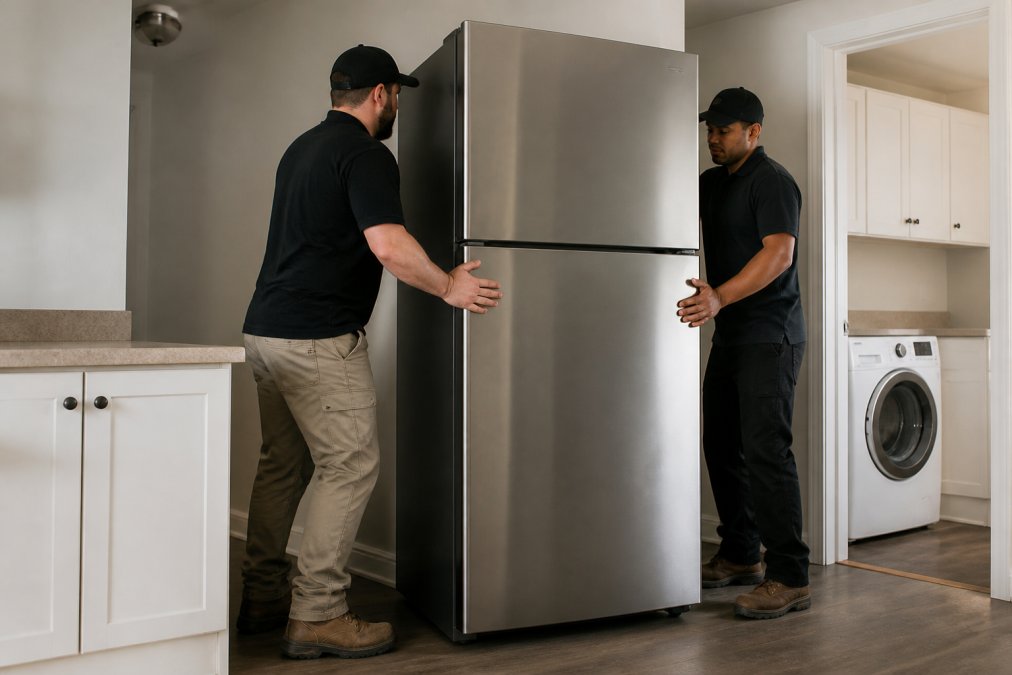
Landlord appliance replacement services handle sourcing, delivery, installation, and haul-away of failed units, usually on a scheduled or emergency basis. For a rental property owner, the value is speed: a working appliance keeps the unit rentable and the tenant satisfied.
A typical replacement workflow runs like this:
- Diagnosis: A professional technician confirms the appliance failure and whether repair is viable.
- Sourcing: You select a replacement from new, refurbished, or scratch-and-dent inventory.
- Scheduling: Delivery and installation get booked around tenant availability.
- Installation: The old unit is disconnected, the new one connected and tested.
- Disposal: Haul-away of the old appliance, often included in the service.
Handling Emergency Repairs and Same-Day Service
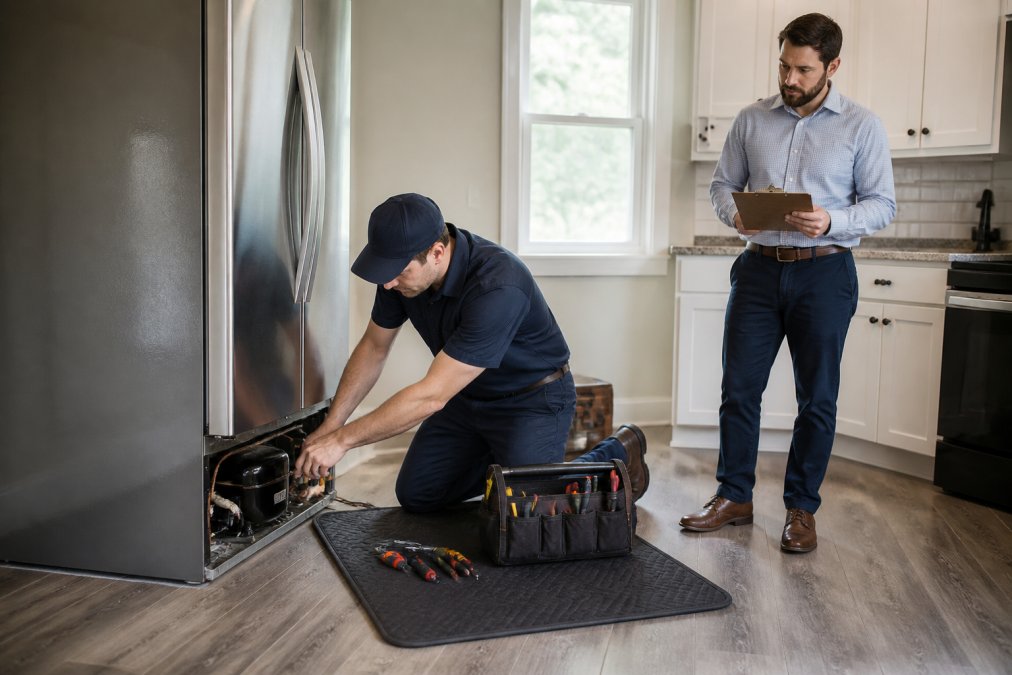
Emergency service matters most for refrigerators, HVAC systems, and anything holding food or controlling temperature. A failed fridge in summer is a habitability issue, not an inconvenience.
Build a relationship with a local provider before you need one. The Appliance Wizard offers in-house repair and service with factory-trained, certified technicians, so a maintenance request does not sit in a queue while your tenant calls you daily. Ask about availability when you set up the account, and keep a diagnostic fee policy in writing so nothing is a surprise.
Repair vs Replace: A Decision Matrix for Big-Ticket Items
The repair-or-replace call comes down to three variables: age, repair cost as a share of replacement cost, and the appliance's remaining expected lifespan. Here is a simple framework.
| Situation | Recommended Action | Why |
|---|---|---|
| Under 5 years old, minor fault | Repair | Unit is well within expected lifespan |
| Over 10 years old, any major fault | Replace | Repair cost rarely justifies remaining life |
| Repair exceeds half of replacement cost | Replace | Money is better spent on a new unit |
| Repeated failures in 12 months | Replace | Signals end of appliance lifecycle |
| Cosmetic damage only | Repair or leave | No effect on function or habitability |
For big-ticket items like refrigerators and ranges, lean toward replacement once repairs stack up. For a garbage disposal or microwave, repair often wins because the replacement cost is low.
Rental Property Appliance Life Expectancy by Unit Type
Rental property appliance life expectancy gives you a planning horizon for capital expenditure. Standard ranges from industry guidance look like this:
- Refrigerators: roughly 10-15 years
- Ranges and ovens: roughly 10-15 years
- Dishwashers: roughly 8-12 years
- Washers and dryers: roughly 8-12 years
- Microwaves: roughly 7-10 years
Rental units tend to hit the low end of these ranges because of higher turnover and heavier use. Budget for replacement on that shorter timeline, and an appliance audit each year keeps you ahead of failures instead of reacting to them.
Tax Deductions for Rental Property Appliance Replacement
Most guides stop at "repairs are deductible, replacements are depreciated" and leave you there. That distinction is real, but it is also incomplete, and the gap between those two buckets is where landlords leave money on the table.
The Core Distinction
Under IRS rules for rental property, an appliance replacement is generally a capital expenditure, not a repair. Repairs restore an asset to its working condition and are deductible in the year paid. Replacements put a new asset in service and are recovered through depreciation over the asset's recovery period.
For residential rental property, appliances fall into the 5-year recovery period under the Modified Accelerated Cost Recovery System (MACRS). That is shorter than the 27.5-year period applied to the building itself, which is why appliance replacements can be a meaningful depreciation source on their own.
The Tangible Property Regulations and the Safe Harbor Election
The tangible property regulations (often called the "repair regs") give landlords a way to deduct certain replacements immediately rather than depreciating them. The most useful tool for appliance work is the de minimis safe harbor election under Treasury Regulation Section 1.263(a)-1(f).
How it works in practice:
- Without an applicable financial statement: the de minimis threshold is $2,500 per invoice or per item, provided you have accounting procedures in place at the start of the tax year.
- With an applicable financial statement: the threshold rises to $5,000 per invoice or per item.
- Election mechanics: you make the election annually by attaching a statement to your timely filed return. It is not automatic.
For a landlord replacing a single refrigerator or dishwasher, the de minimis safe harbor can convert what would have been a depreciated purchase into a same-year deduction. For a multi-unit owner replacing a package of appliances, the per-invoice limit matters, so structuring invoices carefully is a legitimate planning step.
Bonus Depreciation and Section 179
Bonus depreciation allows an additional first-year deduction on qualifying property. The applicable percentage has changed repeatedly through recent tax legislation, and it is scheduled to continue changing. Section 179 allows an election to deduct the cost of qualifying property in the year it is placed in service, subject to annual dollar limits and a taxable income limitation.
Both provisions have rules that interact with the de minimis safe harbor and with each other. The practical takeaway is not to memorize percentages, because they shift. The takeaway is to know that multiple paths exist and that the right one depends on your income profile, your entity structure, and the year of the purchase.
What to Document
A deduction is only as good as the paper behind it. Keep:
- Dated receipts showing purchase price, delivery, and installation separately where possible.
- An appliance inventory listing each unit by type, purchase date, cost, and the property it serves.
- A written capitalization policy if you intend to use the de minimis safe harbor, adopted before the tax year begins.
- Disposal records for the old unit, which help establish that a replacement occurred rather than a repair.
When to Bring in a Professional
The rules above are commonly applied but fact-specific. Thresholds, phase-outs, and election mechanics change with legislation. Confirm current treatment with a tax professional and review the IRS guidance on rental property depreciation and the de minimis safe harbor before you file.
Where to Find Affordable Scratch and Dent Appliances
Affordable scratch and dent appliances are the landlord's best-kept cost lever. These units carry cosmetic dents or scratches that never affect function, and they typically sell for well under new retail. For a rental, a tenant will never notice a scratch on the side of a fridge.
Where to look:
- Local appliance retailers with dedicated scratch-and-dent or refurbished inventory
- Refurbished appliance programs that include a warranty
- Package deals that bundle multiple units for multi-property owners
The Appliance Wizard stocks refurbished appliances and offers package deals, which suits landlords replacing several units at once.
Standardized Maintenance Checklists and Preventive Maintenance
Preventive maintenance extends appliance longevity and cuts emergency calls. A standardized checklist keeps your property maintenance consistent across every unit.
Build one checklist per appliance type and run it at each turnover:
- Vacuum refrigerator coils and check door seals
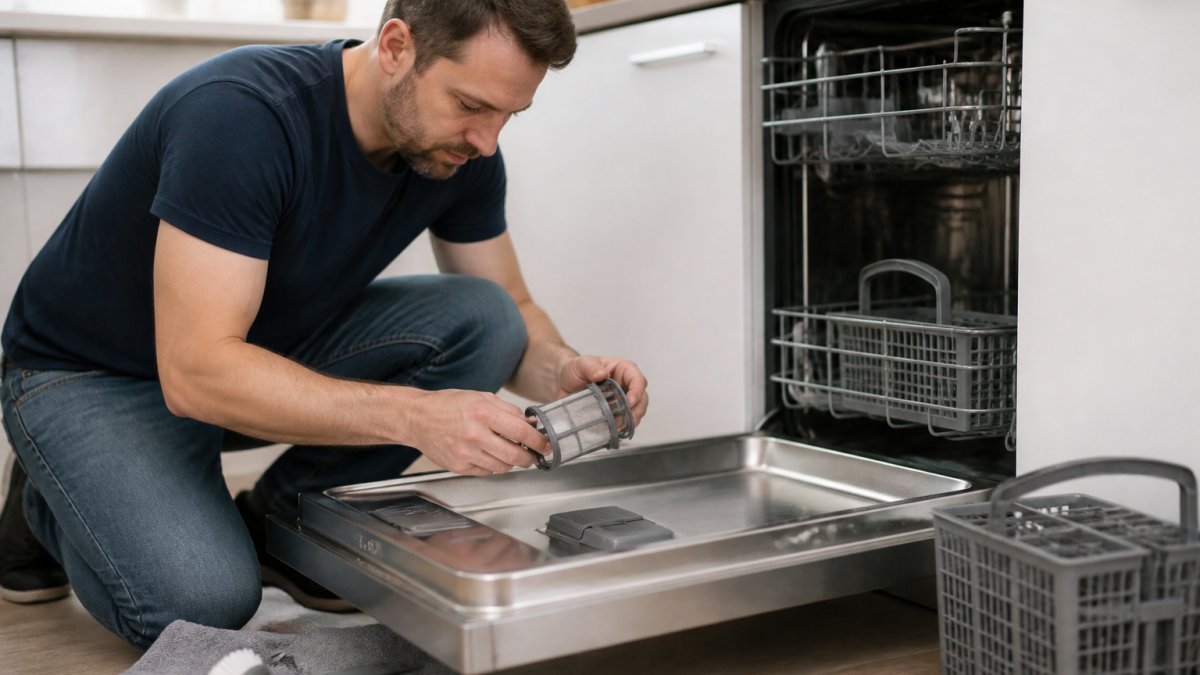
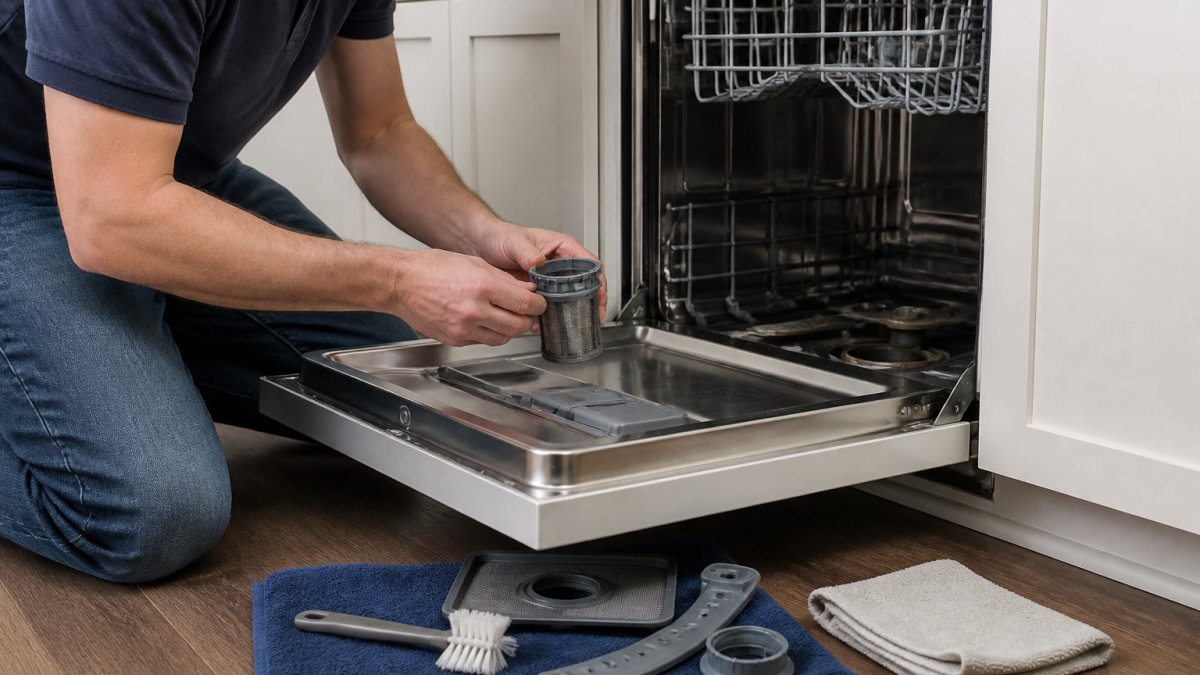
- Test dishwasher for leaks and clean the filter
- Inspect washer hoses for cracks and replace if worn
- Clear dryer vent and lint trap housing
- Check range burners and oven temperature accuracy
- Run the garbage disposal and check for jams
This is the operational edge most landlords skip. A refrigerator maintenance routine alone prevents many of the compressor failures that force full replacement.
Warranty Coverage and Energy Efficiency ROI
Warranty coverage and energy efficiency are usually treated as separate topics. For a rental property owner, they are the same conversation: both determine the true cost of ownership over an appliance's life, and both are routinely mishandled.
How Appliance Warranties Actually Work
Manufacturer warranties cover defects in materials and workmanship for a set period, typically one year on parts and labor for major appliances, with longer coverage on sealed systems like refrigerator compressors. The details matter more than the headline:
- Parts vs. labor: Many warranties cover parts only after the first year, leaving you to pay labor. A compressor that fails in year three may be a free part and a $400 labor bill.
- Registration requirements: Some manufacturers shorten coverage if the product is not registered within a set window after purchase. Register every appliance at installation.
- Transferability: Some warranties transfer to a new owner; most do not transfer to a tenant. In a rental, the landlord is the warranty holder.
- Proof of purchase: Without a dated receipt, warranty claims are frequently denied. This is the single most common reason landlords lose coverage.
Extended warranties and service contracts are a separate product. For a single appliance, the math rarely favors them. For a portfolio of rental units, a service contract can convert unpredictable repair costs into a predictable line item, which has real value for budgeting even if the expected dollar return is neutral.
Energy Efficiency as a Return, Not a Gesture
Newer appliances generally use less electricity and water than units from a decade ago. The ENERGY STAR appliance standards program identifies models that meet federal efficiency criteria, and the program publishes estimated annual energy use and cost for certified models.
For a landlord, the return shows up in three places:
- Utility costs you pay: If utilities are included in rent, every efficiency gain flows directly to your net operating income. A refrigerator upgrade can reduce a recurring monthly cost for the entire life of the unit.
- Utility costs the tenant pays: If the tenant pays utilities, efficiency becomes a marketing feature. Listing a unit as having ENERGY STAR appliances is a concrete, verifiable claim that supports rent.
- Property value: Appraisers and buyers increasingly look at appliance age and efficiency. A unit with appliances near end-of-life is a deferred capital expense that a buyer will price in.
The ROI Calculation That Matters
The useful comparison is not "new appliance vs. old appliance." It is "replace now vs. replace later." Run it like this:
- Estimate the annual energy cost of the existing unit using its age and the ENERGY STAR published averages for comparable new models.
- Subtract the estimated annual energy cost of the replacement.
- Multiply the difference by the expected remaining life of the new unit.
- Compare that total against the incremental cost of buying now versus waiting.
For a refrigerator that runs continuously, the annual energy difference between a 12-year-old unit and a current ENERGY STAR model is often the largest single line in the calculation. For a microwave or garbage disposal, the energy difference is negligible and should not drive the decision.
Where Efficiency and Warranty Intersect
A new appliance resets the warranty clock and the efficiency clock at the same time. That is the real argument for replacing rather than repeatedly repairing an aging unit: you are not just buying a working appliance, you are buying a fresh warranty period and a lower operating cost for the next decade.
Frequently Asked Questions
How often should a landlord replace appliances?
There is no fixed rule, but most landlords replace on a schedule tied to rental property appliance life expectancy. Refrigerators typically last 10-15 years, dishwashers 9-12 years, and washers 10-13 years. Once a unit passes its expected lifespan and needs a repair costing more than half its replacement value, replacement is usually the better financial move. Keeping a written appliance audit with install dates and serial numbers helps you plan replacements instead of reacting to failures.
How long do landlords have to fix broken appliances?
Timelines depend on state and local landlord-tenant law and on whether the appliance is required by the lease. Habitability rules generally require repairs within a reasonable time, often 24-72 hours for essentials like a working refrigerator or heat. Many states allow tenants to send written notice and, if nothing happens, pursue self-help remedies. Check your state statute and put your response window in the lease so expectations are clear.
Can you claim tax deductions for rental property appliance replacement?
Yes, but the rules differ from repairs. A repair that restores an appliance to working order is generally deductible in the year it happens. A full replacement is usually a capital expenditure, which means you depreciate it over its useful life rather than writing it off at once. Some landlords use Section 179 or bonus depreciation to accelerate the deduction. Confirm the treatment with a tax professional before filing.
Where can landlords find affordable scratch and dent appliances?
Local appliance retailers often carry scratch and dent inventory at lower prices than new units, with full warranties in many cases. These units have cosmetic damage, like a dented side panel or a scratch on the door, but work the same as undamaged models. For rental property owners, this is a cost-effective way to replace a failed unit fast without cutting into capital expenditure budgets. Ask about delivery, installation, and haul-away when you buy.