 blog
Top Rated Stackable Laundry Units for Apartments 2026
Table of Contents
- Top Rated Stackable Laundry Units for Apartments in 2026
- Best Stackable Washer and Dryer for Small Spaces
- Apartment Size Washer and Dryer: What to Look For
- Stackable Washer and Dryer Dimensions: Fit Guide
- Stackable Washer and Dryer Installation Requirements
- Stackable vs. All-in-One Combo: Which Fits Your Apartment?
- Ventless vs. Vented Dryers: What Apartments Allow
- Total Cost of Ownership for Stackable Laundry Units
- Frequently Asked Questions
Last Updated: October 9, 2026
Top Rated Stackable Laundry Units for Apartments in 2026
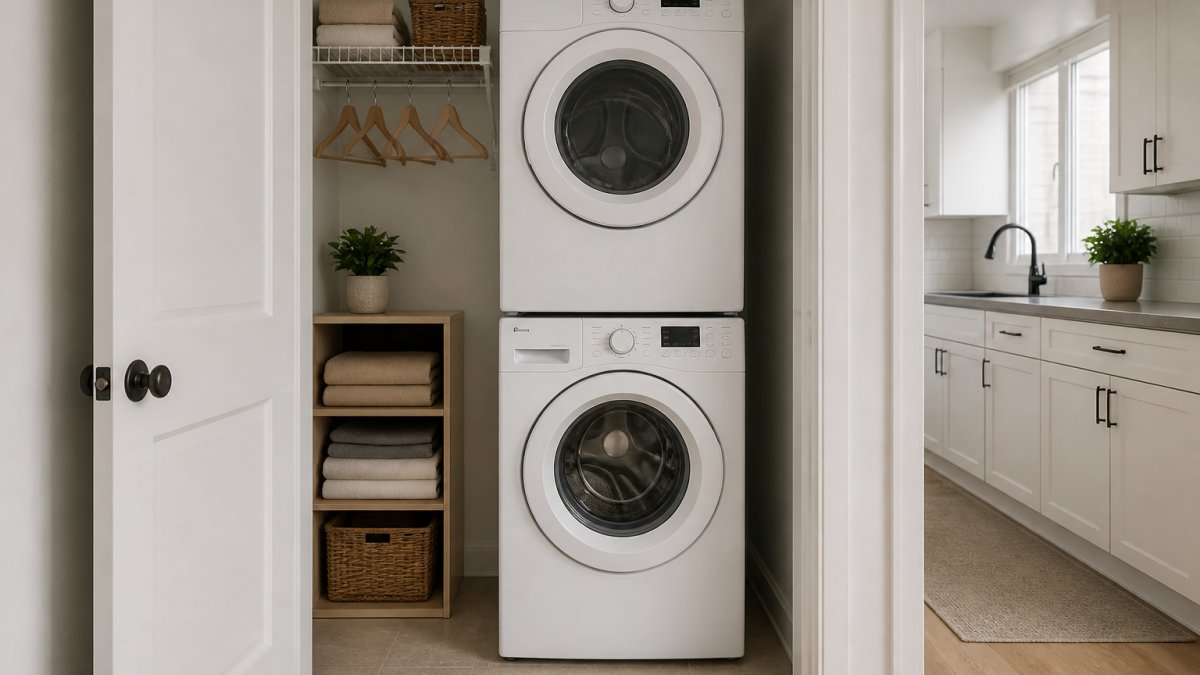
Finding top rated stackable laundry units for apartments in 2026 comes down to three numbers: width, depth, and door swing. Get those wrong and the unit sits in a hallway. Get them right and a laundry closet the size of a coat rack becomes a full laundry room. At The Appliance Wizard, we help apartment dwellers, landlords, and first-time buyers sort through those numbers every week.
Stackable laundry units are separate washers and dryers designed to sit one on top of the other using a manufacturer-approved stacking kit, rather than side by side. They save roughly half the floor space of a traditional pair while keeping full-size drums.
That distinction matters because the alternative, an all-in-one washer-dryer combo, saves even more space but changes how you do laundry entirely. We will cover both, plus dimensions, installation requirements, venting rules, and what these machines actually cost to own over time.
Here is what most buying guides skip: the machine that fits your closet is not always the machine that fits your building's rules. Below, we break down exactly how to check both before you spend a dollar.
Best Stackable Washer and Dryer for Small Spaces
The best stackable washer and dryer for small spaces is a front-load pair under 27 inches wide with a matching stacking kit, because front-loaders stack safely and their controls stay reachable on top. Top-load washers cannot be stacked at all, which eliminates them the moment floor space is tight.
For apartment laundry, look for these traits:
- Front-load washer with a reversible door so the swing works with your closet layout
- Matching dryer from the same brand and series, since stacking kits are model-specific
- Compact washer options around 24 inches wide for studio apartment and condo closets
- Ventless dryer if your building has no exterior vent
What most guides miss is brand matching. A stacking kit is engineered for one washer model and one dryer model. Mixing brands, or even mixing series within a brand, usually voids the kit's approval and puts the warranty at risk.
Apartment Size Washer and Dryer: What to Look For
Apartment size washer and dryer sets are defined less by drum size and more by footprint and hookup compatibility. A compact pair typically runs about 24 inches wide, while a standard front-load pair runs about 27 inches wide, and that three-inch difference decides whether a laundry closet works.
Capacity is measured in cubic feet. Compact units generally land in the 1.5 to 2.5 cubic feet range, while full-size front-loaders run from about 4.0 to 5.0 cubic feet. Smaller drums mean more loads per week, which matters more than most buyers expect.
Three checks before you shop:
- Measure the closet's width, depth, and height, not the room's
- Confirm your water hookups, drain connection, and electrical requirements
- Ask your landlord or building manager about venting and floor vibration rules
If you rent, get the building's approval in writing before delivery day. Some leases restrict appliance changes outright.
Stackable Washer and Dryer Dimensions: Fit Guide
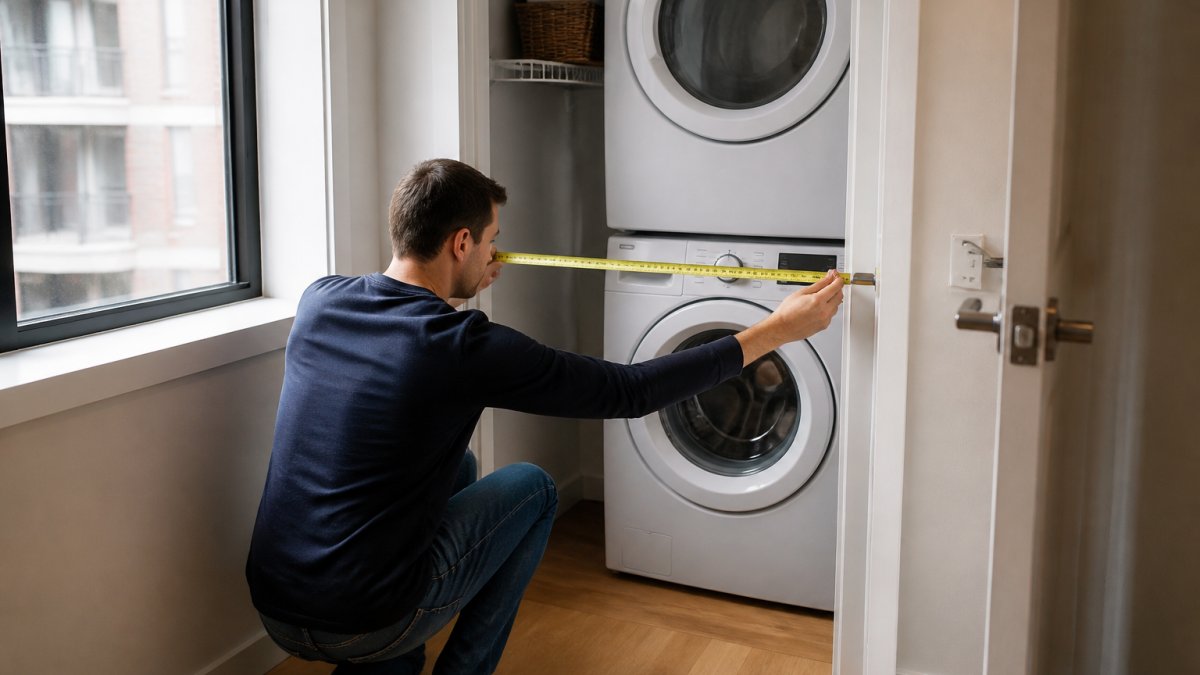
Stackable washer and dryer dimensions vary by model, but the practical fit rule is simple: measure the narrowest point on the path to the closet, not just the closet itself. Doorway width, hallway turns, and stairwell landings stop more deliveries than closet size ever does.
The numbers that actually decide the fit
Most compact front-load pairs run about 24 inches wide, and most standard front-load pairs run about 27 inches wide. A stacked pair typically reaches 70 to 80 inches tall once the stacking kit is installed, and combined depth usually lands between 27 and 34 inches depending on whether the units are compact or full-size. Those are the three figures to write down before you shop.
Then add the clearances the manual specifies. A common pattern is roughly 1 inch on each side, 1 to 2 inches behind the units for hoses and the dryer vent, and a few inches above the stack for the control panel and lid clearance. Tightening those gaps to zero does not make the unit fit better. It makes it vibrate harder and shortens hose life.
Apartment fit and installation checklist
Work through this list in order. Each line has killed a delivery at some point.
- Closet opening. Measure width, depth, and height at the tightest point, including any door frame, baseboard, or shelf that intrudes.
- Doorway and path. Measure the narrowest doorway, every hallway turn, the stairwell landing, and the elevator interior if that is how the unit arrives. A stacked pair usually ships as two boxes, so measure the larger box, not the assembled stack.
- Hookup locations. Confirm hot and cold supply lines, the drain standpipe or laundry sink, and the electrical outlet are all within the hose and cord reach the manual specifies. Note whether the outlet is a standard 120-volt household circuit or a dedicated 240-volt circuit.
- Dryer venting. If you are installing a vented dryer, confirm there is an exterior wall or existing duct run close enough to keep the duct short and straight. If not, plan for a ventless model.
- Floor loading and leveling. Laundry closets are often on upper floors. Confirm the floor is solid and can carry the combined weight of two loaded machines, and plan to level the stack after installation.
- Delivery access. Check the building's freight elevator rules, loading dock hours, and any certificate-of-insurance requirement for delivery crews. Many buildings require advance notice.
- Landlord or building approval. Get written approval for the appliance change and for any venting or electrical modification before delivery day.
Get one of these wrong and the unit goes back on the truck. Measure twice, and measure the path, not just the closet.
Stackable Washer and Dryer Installation Requirements
Stackable washer and dryer installation requirements come down to four connections: water hookups, a drain connection, the right electrical requirements, and either a dryer vent or a ventless setup. Miss one and the install stops halfway.
Here is what each involves:
| Requirement | What to Check | Common Problem |
|---|---|---|
| Water hookups | Hot and cold supply lines within hose reach | Lines too short or corroded |
| Drain connection | Standpipe or laundry sink with proper height | Drain too low, causes siphoning |
| Electrical | Dedicated circuit matching the unit's rating | Shared circuit trips under load |
| Dryer venting | Rigid or semi-rigid duct to the exterior | Crushed or clogged flex duct |
Electric dryer and gas dryer requirements differ. Electric dryers need a dedicated circuit sized to the unit, while gas dryers need a gas line plus proper ventilation. Confirm which your apartment has before you shop.
Professional installation is worth it here. Our team at The Appliance Wizard handles delivery, connection, and leveling. A machine that is level and properly vented runs quieter and lasts longer.
Stackable vs. All-in-One Combo: Which Fits Your Apartment?
An all-in-one washer dryer washes and dries in a single drum, while a stackable set uses two separate machines stacked vertically. The combo wins on floor space. The stackable set wins on speed, capacity, and repair flexibility.
The trade-off is cycle time. A combo unit typically washes and dries one load in a single long cycle, and you cannot wash the next load while the first one dries. A stacked pair lets you wash and dry simultaneously, which matters in a household doing several loads a week.
Repairs tell a similar story. If one machine in a stacked pair fails, you replace or fix that machine. If a combo unit fails, the whole appliance is out of service.
For most apartments with a real laundry closet, we recommend the stacked pair. For a true studio with one small nook and no vent, the combo is the honest answer.
Ventless vs. Vented Dryers: What Apartments Allow
Ventless dryers dry clothes without ducting air to the exterior, using either condensation or heat-pump technology, while vented dryers push moist air outside through a duct. Many apartment buildings allow only ventless because there is no exterior wall to vent through.
Ventless models cost more upfront and generally take longer per drying cycle. What they buy you is placement freedom: no duct, no exterior wall, no building modification.
Vented dryers dry faster and usually cost less to buy. They need a clean, short duct run to the outside. Long or crushed duct runs cut efficiency and create a lint fire risk, so keep runs short and clean the lint filter every load.
Check your building's rules before you buy either type. Some leases prohibit vented installs entirely, and some require proof of professional installation. Get the answer in writing.
Total Cost of Ownership for Stackable Laundry Units
Total cost of ownership for stackable laundry units goes well beyond the sticker price. The purchase price is only the first line. Add the stacking kit, delivery, installation, and any hookup modifications, then factor in energy and water use over the machine's life. Most buying guides stop at the sticker price, which is why so many apartment buyers are surprised by the second and third invoices.
The cost lines to budget for
- Purchase price. Compact stackable pairs generally cost less than full-size pairs, and ventless dryers usually cost more than comparable vented models. Prices move with promotions, so treat any figure as a starting point and confirm at the time of purchase.
- Stacking kit. Sold separately by most manufacturers and priced by model. Budget for it as a required part, not an accessory.
- Delivery and installation. Varies by dealer and by building. Stair carries, after-hours deliveries, and freight elevator scheduling can add charges.
- Hookup modifications. New supply hoses, a longer drain hose, a new outlet, a dedicated circuit, or a gas line connection all add cost. Electrical or gas work should be done by a licensed professional.
- Venting work. If you are installing a vented dryer and no duct exists, adding one is a real project. Ventless models avoid this line entirely, which is part of why they cost more upfront.
- Energy and water use. Front-load washers use less water than top-loaders, and heat-pump ventless dryers are typically the most efficient drying option. Actual operating cost depends on your utility rates and how often you run loads.
- Maintenance and repairs. Clean the lint filter every load, check hoses for cracks, and keep the stack level. A well-maintained pair lasts years longer than a neglected one. When something does fail, a stacked pair lets you repair or replace one machine instead of the whole appliance.
Why the cheapest sticker price often loses
A lower purchase price can be erased by a missing stacking kit, an electrical upgrade, or a venting project. The honest comparison is the all-in figure: purchase price plus kit plus delivery plus installation plus any hookup or venting work, spread over the expected life of the pair. That is the number to compare across models.
Where you buy changes the ownership experience more than the brand does. A local dealer with in-house repair and genuine replacement parts keeps a machine running instead of replacing it. That is the model we run at The Appliance Wizard: factory-trained technicians, in-house service, and financing options.
Pricing depends on the model, the stacking kit, and your hookup situation. Browse our current inventory at www.theappliancewizard.com or stop by a showroom and we will walk you through the options that actually fit your space.
Frequently Asked Questions
What is the best stackable washer and dryer for an apartment?
The best stackable laundry units for apartments balance compact dimensions, capacity, and installation flexibility. Look for a front-load washer and dryer pair that fits within 24 to 27 inches wide and offers at least 4.0 cubic feet of drum space. Ventless condensing dryers are often ideal for apartments because they don't require an outside vent. For personalized recommendations based on your space, consult a local appliance specialist.
How much clearance does a stackable washer and dryer need?
Stackable units typically need about 1 inch of clearance on each side, 1 inch behind, and 1 inch above to allow for vibration and airflow. Check your specific model's manual, as some require more. Also account for door swing and hose connections. If you have a laundry closet, ensure the doors can close without hitting the machines. Proper clearance prevents noise and extends the life of your appliance.
Are ventless dryers better for apartments?
Ventless dryers are often better for apartments because they don't require an external vent, making installation simpler and more flexible. They use condensation or heat pump technology to dry clothes, which can be more energy-efficient. However, they may take longer to dry and need a drain or water tank. If your building doesn't allow venting or you lack an outdoor wall, a ventless dryer is a practical choice.
Do stackable washer and dryer sets need a special vent?
Vented dryers require a duct to the outside, which may not be possible in all apartments. Ventless dryers do not need external venting; they either condense moisture into a drain or collect it in a tank. If you have an existing dryer vent, a vented model is fine. Otherwise, choose a ventless dryer. Always check building rules before installation, as some apartments prohibit venting modifications.
Apartment laundry upgrades fail on fit and building rules far more often than on budget. Before you buy, measure the closet, photograph the hookups, and confirm what your building allows. The Appliance Wizard carries stackable washers and dryers, compact units, and ventless models, with professional installation, in-house repair, and financing options to match. Get started with The Appliance Wizard and find a laundry setup that fits your apartment the first time.